State Farm’s emergency road service will tow a dead EV to a charging station, but it doesn’t put a charge in your car on the roadside.
State Farm calls its roadside add-on “Emergency Road Service,” and it’s built to cover the same basics for every vehicle on your policy: flat tires, lockouts, jump starts, and towing when a car can’t be driven. If your EV runs dry on the I-15 or dies in a Mission Valley parking structure, State Farm will send someone. What they send, and what that someone can actually do for a battery-electric car, is worth understanding before you’re stuck.
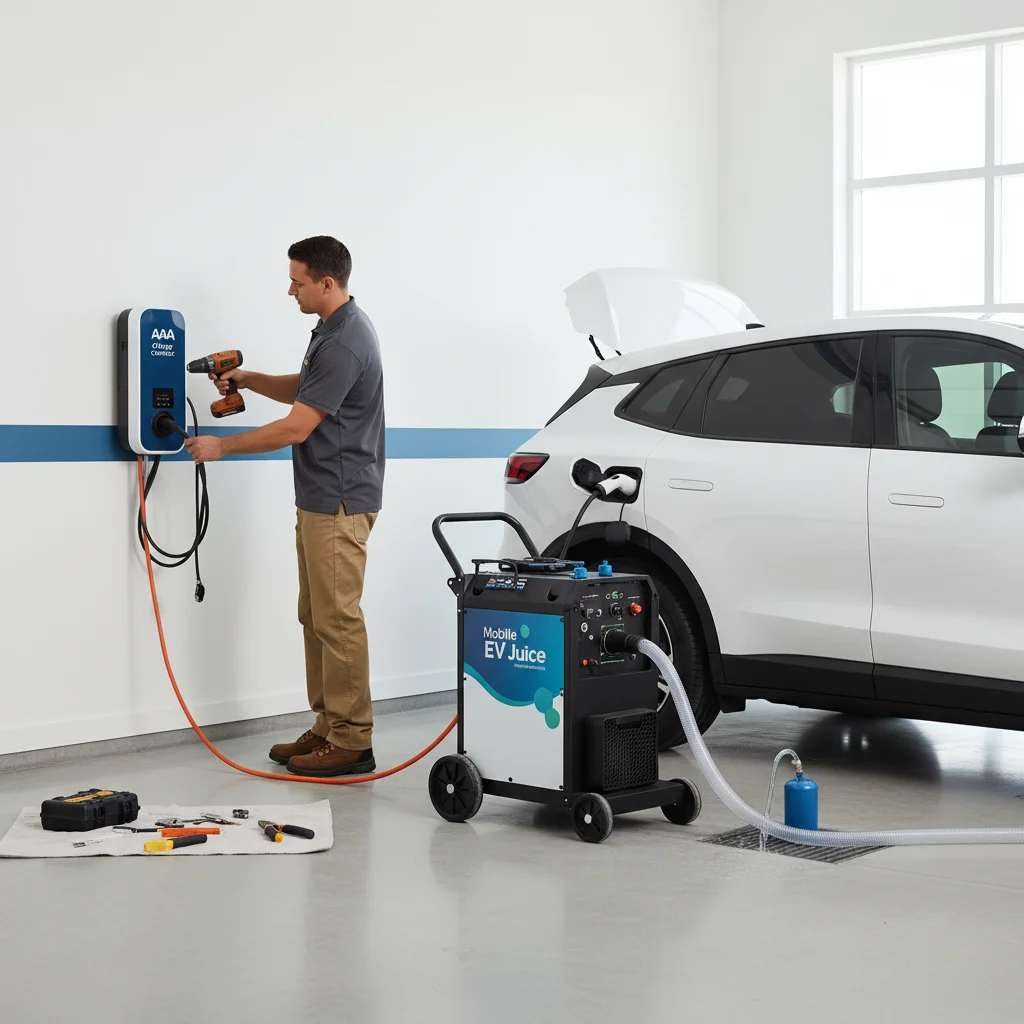
What State Farm’s Emergency Road Service covers for an EV
If your EV’s 12V battery dies, State Farm’s roadside benefit works the way it would for any car: dispatch a provider, attempt a jump, and if the car still won’t move, arrange a tow. If the actual problem is that your high-voltage traction battery is empty, not damaged, just out of charge, the standard response is a tow to the nearest place you can plug in. State Farm’s own materials describe the benefit as paying “the fair cost” of getting you to help, which in practice means a tow to a charging station or repair shop, not a technician delivering range to your location.
State Farm’s own consumer pages do mention that in some areas the roadside provider dispatched might carry a portable charger. That’s worth knowing, but don’t count on it. It’s described as a possibility in certain regions, not a guaranteed part of the benefit, and coverage details shift by state and by which roadside tier is on your policy. For most State Farm policyholders calling in from San Diego County today, the realistic outcome of an out-of-charge call is still a flatbed and a ride to the nearest charger.
Confirm your actual coverage before you need it
State Farm doesn’t publish one universal towing distance or dollar cap that applies to every policy, and we’re not going to guess at a number for you. Call your agent or check your declarations page and ask specifically: does my Emergency Road Service cover towing to an EV charging station the same way it covers towing to a repair shop, and is there a mileage limit. Getting that answer now means you’re not negotiating it from the shoulder of the freeway.
Why “tow to a charger” is still a multi-hour problem
A tow solves the immobility. It doesn’t solve the empty battery. Once you’re at the station, you still have to wait for the car to actually charge, which can run well past an hour if the closest available charger is a slower Level 2 unit instead of a fast charger. Add the wait for the tow truck itself and the drive there, and what started as a dead battery turns into a half-day event. We walked through that exact math in hidden costs of towing a dead EV, and the pattern is consistent across every insurance carrier’s roadside plan, not just State Farm’s.
San Diego County makes this worse in specific spots. The coast has chargers everywhere. East County, the mountain routes toward Julian, and stretches like the Camp Pendleton corridor on I-5 have far fewer options, so “nearest charger” from a tow dispatcher’s map isn’t always close.
What a mobile charge does that a tow can’t
A mobile EV rescue removes the middle steps. We come to you, wherever you’re stopped, and deliver charge straight into your car. There’s no ride-along to a station, no waiting to see if a charger is open or working, no second stop after the first one. You get enough range to keep going, and you drove there yourself, not on a flatbed. For a side-by-side on how this plays out against a traditional insurance roadside call, see using Geico roadside for an EV in San Diego and our full breakdown in AAA vs. mobile EV charging San Diego. Different carrier names, same structural gap.
Keep both, use them for different problems
There’s no reason to drop State Farm’s roadside coverage. It’s genuinely useful for flats, lockouts, and anything that actually needs a repair shop, not a charge. Save the mobile charging call for the specific situation where your car is fine mechanically and just needs power. Treat them as two tools for two different jobs, not competitors.
Frequently asked questions
Does State Farm’s roadside plan ever include on-site EV charging?
Some State Farm materials mention that a roadside provider in certain areas might carry a portable charger, but it isn’t a guaranteed, universal benefit. Confirm with your agent whether it applies in San Diego County before you assume it’s covered.
Will State Farm tow my EV on a flatbed?
Most EVs should be flatbed towed to avoid damage to the drive motor or regenerative braking system from dragging the wheels. Ask the dispatcher for a flatbed specifically if it isn’t automatically assigned.
Does State Farm pay for the electricity once I’m at a charging station?
No. The towing benefit gets you to the charger. The cost of the actual charge at the station is on you.
What if the nearest charger is outside my coverage area?
Ask before the tow truck arrives. If the closest working charger is further than your policy’s covered distance, you may owe the difference, or you can skip the tow altogether and call a mobile charging service.
Is a mobile charge faster than a State Farm tow for a dead EV?
Almost always, because it skips the tow, the ride, and the wait at a public charger entirely. You get range delivered where you’re already stopped instead of driving somewhere else to get it.
If your EV is out of charge anywhere in San Diego County, skip the tow question and call Charge Pro SD at (858) 400-4465 and we’ll be on our way.