Last updated: April 23, 2026
Mobile EV charging and roadside assistance in Alpine, CA
Ran out of charge in Alpine? Share the vehicle, charge port, battery state, exact location, and parking or road-access details. Charge Pro SD refers your request to an independent operator, who confirms whether the location and equipment are compatible and provides the price and timing directly.
What should a driver report when an EV is stranded in Alpine?
Alpine sits near 2,000 feet on the I-8 climb out of the valley, with residential roads off Victoria Drive, South Grade Road, Alpine Heights, and Rancho Palo Verde. Eastbound and westbound remaining range can change on the grade even when the dash still looks comfortable.
Share the vehicle, charge port, battery state, nearest exit or address, and access details. Charge Pro SD refers the request to an independent operator, who decides whether mobile charging or available low-voltage assistance is appropriate.
How does mobile EV charging work in Alpine?
Charge Pro SD collects the vehicle, charge-port, battery, location, and access details and refers the request to an independent operator. The operator decides whether the location is safe and reachable and whether compatible equipment is available.
AC Level 2 charging commonly uses J1772 or J3400/NACS. CCS is used for DC fast charging, so a CCS adapter alone does not establish AC compatibility. Charging time and resulting range vary by operator equipment, vehicle acceptance rate, battery state, and conditions. The operator confirms the method, quote, and timing directly.
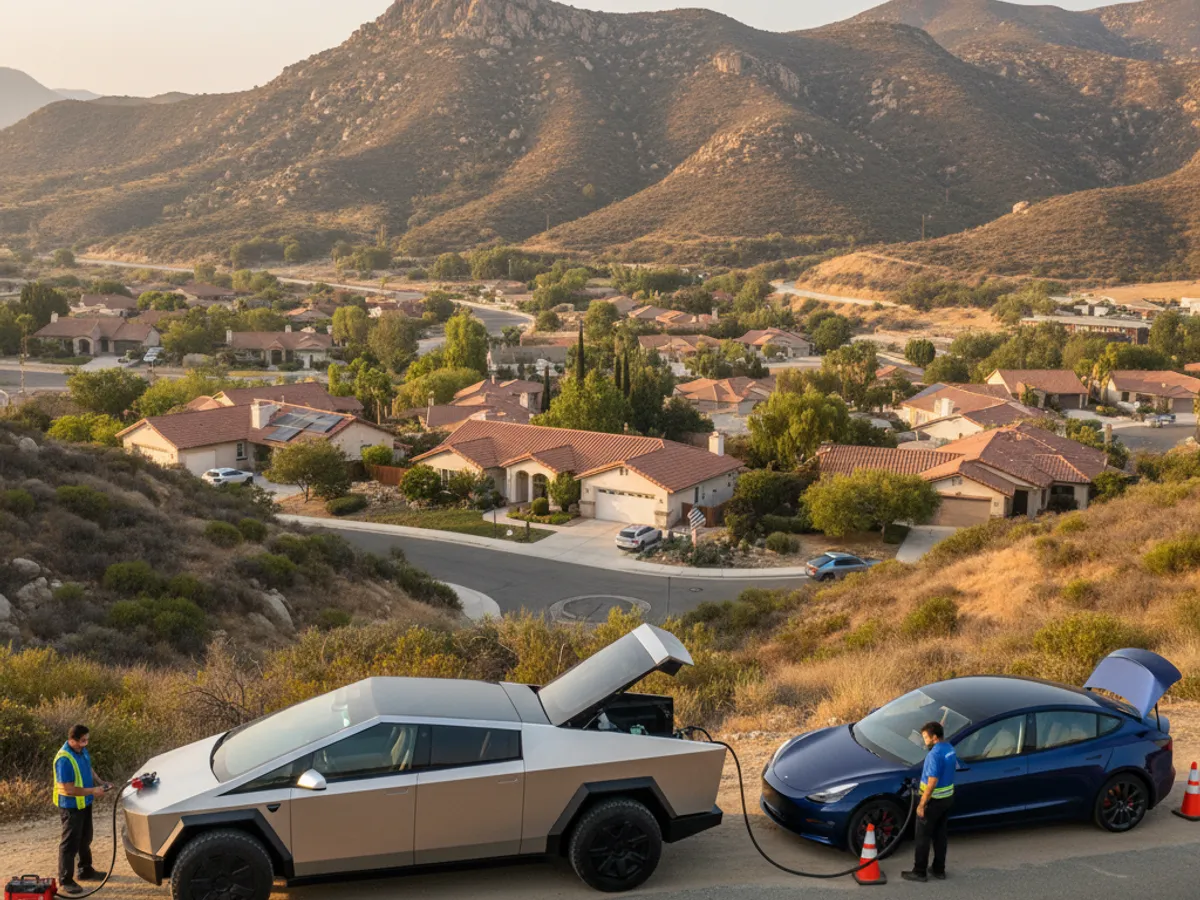
Why do EVs run out of charge in Alpine?
East County includes freeway junctions, inland streets, rural approaches, and properties with varied access. Provide direction of travel, nearest exit or cross street, an exact pin, driveway or gate instructions, vehicle, and charge-port details. Operator availability and travel time must be confirmed for the specific request.
For I-8, include direction of travel, the Tavern Road or West Willows area, and whether the vehicle can reach a lot off Alpine Boulevard. For a house call, describe driveway grade, gate, and clearance. Do not treat any remaining-range figure as a rule for continuing or turning around. This sits inside the existing San Diego County service area. Charge Pro SD does not set the price. The independent operator quotes you before work starts and bills you directly.
Neighborhoods and areas to identify in your request
Use the most specific neighborhood, road, lot, garage, or property entrance available. The independent operator confirms service availability for the exact location.
- Alpine proper
- Alpine Heights
- Rancho Palo Verde area
- Victoria Drive area
- South Grade Road area
- Tavern Road area
- East Alpine
What EV roadside services are available in Alpine?
These links describe the request types listed for Alpine. Independent operator capabilities vary, so confirm the equipment, scope, price, and timing for your vehicle.
Common questions about mobile EV charging in Alpine
Is there anywhere to charge east of Alpine on I-8?
Do not rely on a remembered station or an assumed gap. Check a live map for chargers compatible with your vehicle, then share the make, model, model year, charge port, battery state, and exact pin. An operator can confirm whether on-site charging is feasible and help you evaluate the next safe charging or recovery step.
How long does a rescue take to reach Alpine?
Timing depends on operator availability, I-8 traffic, weather, and the exact Alpine location. Share the pin, exit or driveway instructions, and vehicle details. The independent operator gives timing and a quote before work starts.
Do you handle night calls on I-8 near Alpine?
You can submit the request at any hour. Availability and timing must be confirmed by an independent operator. If the vehicle is in a traffic lane or there is immediate danger, call 911. For a vehicle safely out of traffic, share an exact pin, direction of travel, and nearest exit. A lit lot off Tavern Road or West Willows is often easier to describe than a dark shoulder, but the operator still has to confirm that the spot is serviceable.
Do you do EV charger installation in Alpine?
No. Charger installation is licensed electrician work and is outside this referral service. For a stranded EV in Alpine, Charge Pro SD can pass the vehicle, location, access, and fault details to an independent operator, who confirms the specific roadside equipment and service they can provide.
Other East County communities we serve
Where we work in Alpine
Use the map to identify the vehicle's exact location. The independent operator confirms availability and access for that specific request.
Stranded with a dead EV in Alpine?
Call with the vehicle, charge port, battery state, exact location, and access details. An independent operator confirms feasibility, price, and timing.