A NEMA 14-50 outlet installed for EV charging in San Diego typically costs $300 to $1,000, and it’s usually the cheapest way to add real home charging capacity.
Quick note first: Charge Pro SD does mobile roadside rescue and mobile charging, not home charger installation. This guide is here to help you plan a permanent charger, and it points you to the real facts, not a pitch for a service we don’t offer.
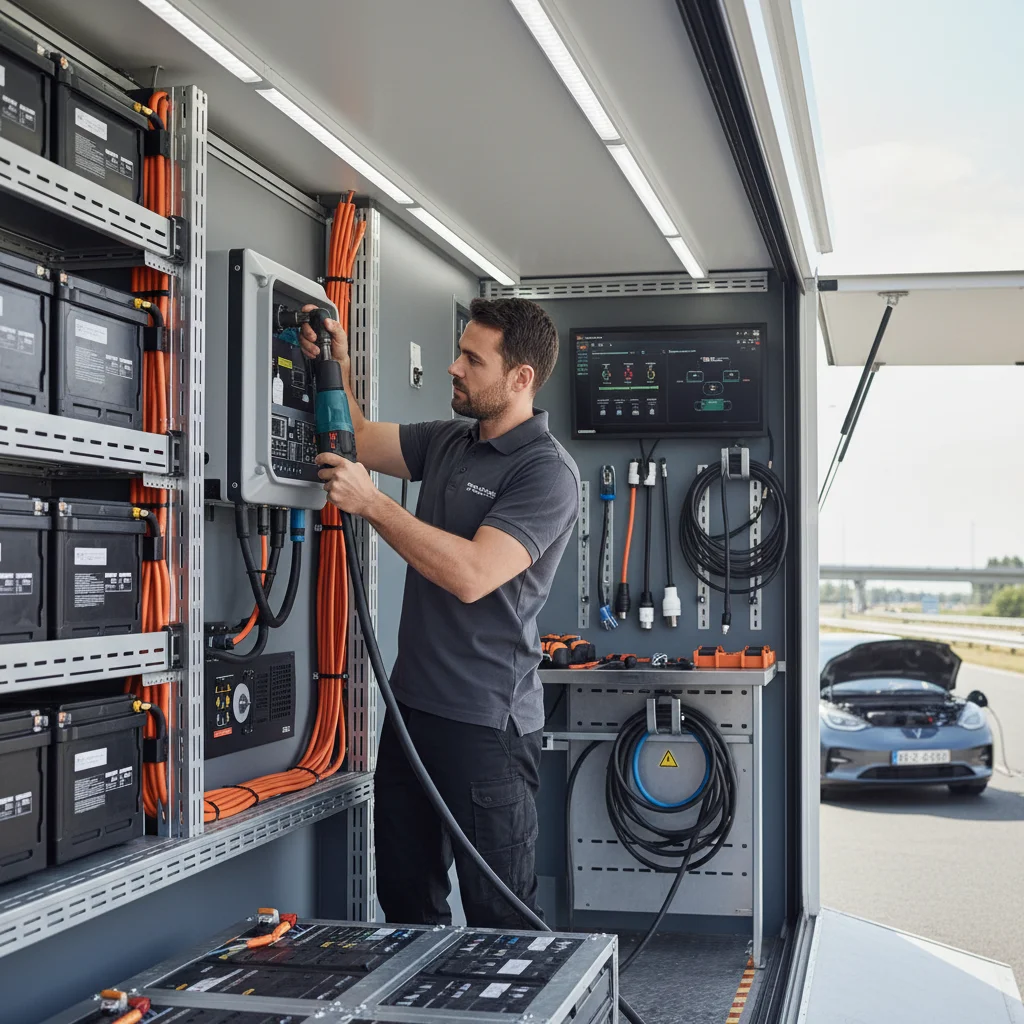
The same outlet family our truck plugs into
Here’s a detail that surprises a lot of drivers. Our Cybertruck rescue vehicles run their onboard 240V bed outlet on a NEMA 14-50, the exact same outlet standard that shows up in home garages across San Diego for EV charging. It’s the same connector shape and voltage, just serving two different jobs, one delivering emergency range on the roadside, the other quietly charging a car overnight at home.
We’re not installers, so the rest of this guide focuses on what that outlet actually costs to add at your house, and how it stacks up against other home charging setups.
What a NEMA 14-50 install involves
A NEMA 14-50 is a 240V, 50-amp-rated outlet, the same style long used for RVs and some dryers before it became a common EV charging fixture. Installing one for a car means running a dedicated circuit from your electrical panel to a wall outlet near where you park, then plugging in a portable Level 2 charger (often called mobile connector or EVSE) that came with your car or that you bought separately.
Because it’s just an outlet rather than a hardwired charging unit, the install is generally simpler and cheaper than a fully hardwired Wall Connector or third-party charger. That’s the main reason the price sits lower, in the $300 to $1,000 range for a straightforward job.
Why it’s often the cheapest real option
A few things keep NEMA 14-50 costs down compared to other setups:
- No dedicated charger hardware to buy. You’re paying for the outlet and the circuit, not a wall-mounted unit, since most EVs come with a portable charger that plugs into it.
- Simpler labor. Mounting an outlet box is generally less work than mounting and wiring a hardwired charging unit.
- Flexibility. If you sell your EV or move, the outlet stays useful for other 240V equipment, including RVs, welders, or a future charger.
The tradeoff is that a portable charger plugged into a 14-50 outlet is usually a little less convenient day to day than a permanently mounted unit with a shorter, thicker cable. For most drivers, that’s a minor tradeoff for the lower cost.
Where the price climbs
The same factors that drive up any home charger install apply here too. If your panel doesn’t have spare capacity, you’re looking at either a load management device or a full panel upgrade, and either one adds real cost on top of the base outlet install. A long wire run from your panel to your parking spot adds labor. San Diego housing built from the 1960s through the 1980s more often runs 100-amp panels that are closer to their limit, so older homes are more likely to see a higher quote than newer construction. Our full cost breakdown for home EV charger installation covers the panel math in more detail if you want the bigger picture.
Permits still apply
Don’t skip this step and don’t let anyone talk you into skipping it. A NEMA 14-50 for EV charging is still a 240V circuit, and San Diego County jurisdictions generally require an electrical permit for it, same as a hardwired charger. A licensed electrician should pull the permit and schedule the inspection as part of the job. An unpermitted circuit is a real risk to your home insurance if something ever goes wrong.
What’s true about incentives right now
The federal 30C credit, worth 30 percent of a residential charging install up to $1,000, applied only to installs completed by June 30, 2026. That deadline has passed, so don’t build it into your budget for a new install now. SDG&E doesn’t currently offer a rebate specifically for chargers or outlets either. The real ongoing savings comes from a time-of-use EV rate plan, which prices overnight charging well below daytime rates if you schedule your charging accordingly.
Keeping your EV charged while the outlet gets installed
Even a simple outlet install takes time to schedule, especially during busy months. If you need to keep driving in the meantime, our mobile EV charging service delivers a charge directly to your driveway, no outlet required. It’s a practical bridge while you wait on an electrician’s schedule to open up. You can also read how our mobile rescue trucks actually work if you’re curious what the on-the-spot process looks like. For the bigger comparison between a permanent home setup and mobile charging, our home charger vs. mobile charging guide lays it out plainly.
Frequently asked questions
How much does a NEMA 14-50 outlet cost to install for EV charging?
Most straightforward installs run $300 to $1,000. Costs go up if your panel needs a load management device or a full upgrade, or if the wire run to your parking spot is long.
Is a NEMA 14-50 outlet as good as a hardwired charger?
It charges at the same rate as a comparable hardwired Level 2 charger, since the speed comes from the circuit and the charger, not the outlet type. The main difference is convenience: a portable charger plugged into an outlet is a bit less tidy than a mounted unit with a short cable.
Do I need a permit for a NEMA 14-50 EV outlet?
Yes. It’s still a 240V circuit tied into your home’s panel, and most San Diego County jurisdictions require a permit for that work regardless of whether it ends in an outlet or a hardwired charger.
Can I use the same charger my car came with on a NEMA 14-50 outlet?
In most cases, yes. Most EVs ship with a portable charging cable that includes or supports a NEMA 14-50 adapter, which is part of why this outlet type is popular for home charging.
What if I need to charge before my outlet is installed?
That’s what mobile charging is for. We can deliver a charge to your home while you’re waiting on the electrical work, so your daily driving doesn’t have to pause for a permit to clear.
Whether you’re planning a NEMA 14-50 install or just need a charge while you wait, we can help close the gap. Call Charge Pro SD at (858) 400-4465 and we’ll be on our way.