Sometimes. Roadside assistance may handle an EV jump-start request when the low-voltage battery is the problem. An empty traction battery needs different help, so the operator must review your vehicle and symptoms first. If the car is in a travel lane or another dangerous place, call 911.
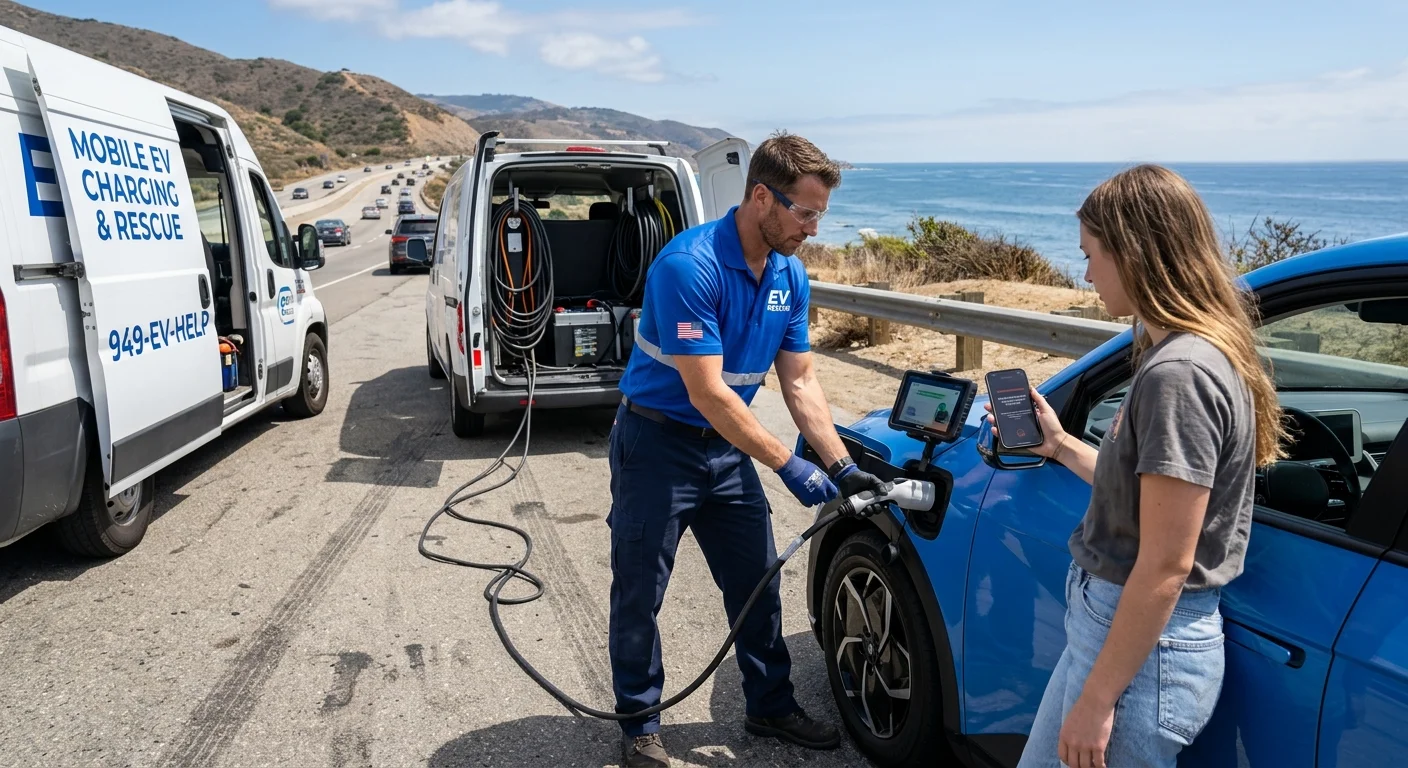
The answer depends on which battery lost power
“Can you jump start an EV?” sounds like a yes-or-no question. For a roadside operator, it’s a diagnosis question first.
The operator needs to distinguish between two possible problems. One involves the vehicle’s low-voltage battery system. The other involves an empty traction battery, meaning the battery used for driving.
A jump may fit some low-voltage situations. It doesn’t refill an empty traction battery. That distinction changes the type of roadside help you may need.
Don’t rely on the word “dead” alone. Drivers use it for several situations. A vehicle may be unresponsive, display a warning, refuse to enter drive, or show an empty battery. Those descriptions give the operator more useful information.
Your EV’s make, model, and model year also matter. Battery systems and approved procedures aren’t identical across every electric vehicle. The operator should review those details before recommending a jump, mobile charging, or transport.
This is why roadside assistance can’t promise that every EV no-start call ends with a jump. The service provider must identify the likely problem and confirm whether its equipment matches the vehicle.
For model-specific procedures, consult the current owner’s manual. Our guide to jumping an EV safely provides more context, but it doesn’t replace the instructions written for your exact vehicle.
Separate low-voltage failure from an empty battery
The quickest way to describe the problem is to explain what happened before the vehicle stopped responding. Avoid diagnosing the battery yourself. Give the operator the facts you can see.
Start with the charge level last shown by the vehicle. Then report every visible warning message exactly as written. If the screen is unavailable, say that instead of guessing what failed.
A low-voltage no-start request and an out-of-charge request follow different paths. A roadside operator may assess a jump for the first situation. For an empty traction battery, the operator may consider another service, such as mobile charging or transport.
A jump isn’t a charge for the traction battery. Asking only for a “jump” can therefore send the wrong description of the problem. Tell the operator whether the vehicle showed remaining driving charge before it became unresponsive.
You can read more about the distinction in our guide to what happens when an EV’s 12V battery dies. For broader electric-vehicle information, the U.S. Department of Energy also provides owner resources.
Don’t attempt connection steps based on advice written for another model. Battery access and manufacturer procedures can differ. The current vehicle manual is the authority for your car.
If the traction battery appears empty, describe the request as an out-of-charge EV. That gives the operator a clearer starting point for deciding what assistance fits.
Share the EV model and warning message
Good roadside triage begins with specific information. Before calling, gather what you can without attempting repairs or opening battery areas.
Share the full make, model, and model year. “Electric Hyundai” or “Tesla” may not be enough. A model-specific description helps the independent operator review the right vehicle information.
Next, read the warning message word for word. Don’t paraphrase “electrical system” as “dead battery.” If several alerts appear, report each one. A photo of the display may also help when the operator accepts images.
Explain what the vehicle does when you try to start it. Say whether the display responds, whether the vehicle recognizes the key, and whether it enters drive. These are observations, not a diagnosis.
Location details matter too. “San Diego” covers a large service area. Name the street, freeway, parking facility, neighborhood, or nearby landmark. A vehicle on I-5 near Chula Vista needs a more precise location description than “South Bay.” The same applies to a garage in Kearny Mesa or a driveway in Escondido.
Also mention access conditions. Tell the operator if the EV sits behind a gate, inside a parking structure, in a tight space, or along a freeway. These details help the operator decide whether the available service and equipment fit the location.
For non-Tesla vehicles, our non-Tesla EV rescue service offers a clear place to start. The independent operator still reviews the exact model before deciding what work is appropriate.
Know when a jump may not fit
A jump request isn’t automatically the right request. The operator may recommend another response after reviewing the vehicle, warning message, charge level, and location.
An empty traction battery is the clearest reason to discuss options beyond a jump. The operator may assess whether mobile charging fits the vehicle and setting. If it doesn’t, transport may be considered.
A jump may also be unsuitable when the available information doesn’t support a low-voltage problem. An unfamiliar warning, unclear battery condition, or model-specific restriction calls for further review. Guessing isn’t a sound basis for roadside work.
Access can change the decision as well. A vehicle inside a low-clearance garage presents different conditions from one in an open driveway. A gated property or constrained parking space may affect which operator can take the request.
Tell the provider about visible damage, unusual smells, smoke, heat, water exposure, or a recent collision. Don’t frame those details as a battery diagnosis. They’re conditions the operator needs before deciding whether a jump belongs in the response.
The right outcome may be an assessment, a model-appropriate jump, mobile charging, or transport. Charge Pro SD doesn’t choose the procedure or perform the work. The independent operator evaluates the situation and explains the available next step.
Our EV roadside assistance service connects drivers with local operators across San Diego County. Before authorizing service, confirm the proposed work, price, and any terms directly with the matched operator.
How Charge Pro SD connects you with help
Charge Pro SD is a referral service. We connect stranded drivers with independent local EV rescue operators. We don’t jump batteries, charge vehicles, tow cars, or own roadside equipment.
When you contact us, share the vehicle and situation details first. Include the make, model, model year, warning message, displayed charge level, and exact location. We pass the request to an operator who can review whether the job matches their service and equipment.
The operator makes the service decision. That may involve evaluating a low-voltage jump request, discussing mobile charging, or recommending transport. The answer depends on the vehicle and the conditions reported.
You’ll contract with and pay the independent operator directly. Charge Pro SD doesn’t set the operator’s prices or provide a warranty for the work. Ask the operator to explain the service, price, and applicable terms before you approve anything.
This process matters because “EV won’t start” isn’t one diagnosis. The same words can describe different warning messages, battery conditions, and access problems. A careful description helps the operator respond to the actual situation instead of the label.
Keep your owner’s manual available if possible. The operator may need model-specific information before deciding whether a jump is appropriate. If the vehicle’s instructions don’t support a roadside procedure, another form of assistance may be the better fit.
When to call us
Call when your EV won’t start and you need a mobile operator to assess whether a jump, charging service, or transport fits. Have the model, warning message, displayed charge level, and location ready.
Call (858) 400-4465. Charge Pro does not send a Charge Pro crew.