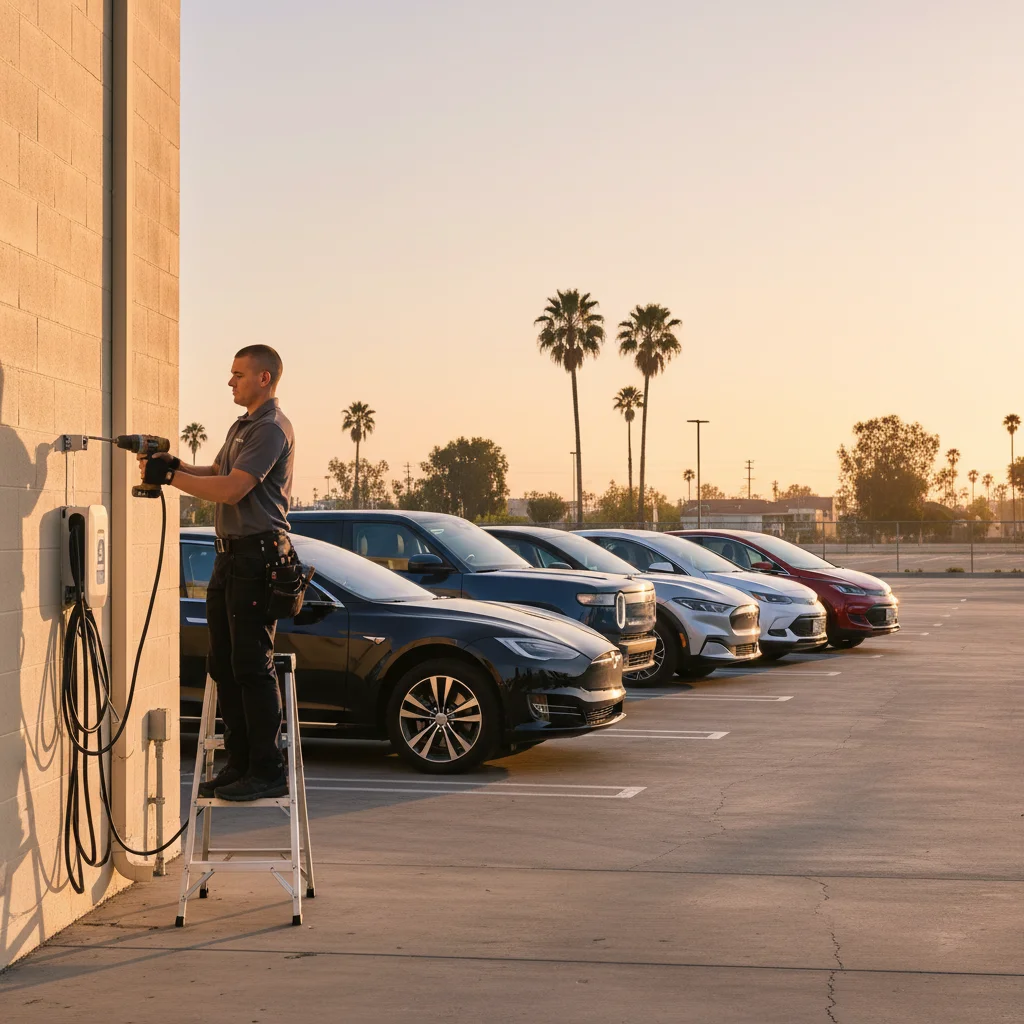
One of the biggest selling points for electric vehicles is their reduced maintenance. No oil changes, no spark plugs, no exhaust systems, it’s a refreshing change from the constant upkeep of a gasoline car. But the myth of the “zero-maintenance” EV can lead to neglect, and neglect can leave you stranded on the I-5 during rush hour.
While you’ve said goodbye to the oil-change sticker, your EV still has a recommended service schedule. The key difference is that these schedules vary significantly from one brand to another. Knowing what your specific vehicle needs, and when, is the best way to ensure reliability and avoid a preventable roadside emergency.
What every EV needs regardless of brand
Before diving into brand specifics, a few maintenance items are universal to every electric car on the road, from a Nissan Leaf to a Porsche Taycan. These are the fundamentals that keep your vehicle safe and efficient. For a general overview, you can check our guide to what EV owners need to know about maintenance schedules, but here are the core tasks.
- Tires: This is the single most important maintenance item on an EV. Electric vehicles are heavy and deliver instant torque, which can lead to faster tire wear. You should check your tire pressure monthly and have them rotated every 6,000 to 8,000 miles. This ensures even wear and maximizes their lifespan.
- 12-Volt Battery: Every EV has a conventional 12V lead-acid or lithium-ion battery to power accessories, computers, and door locks before the main high-voltage battery pack is engaged. If this small battery fails, your car won’t “turn on,” even with a fully charged traction battery. Most 12V batteries last 3-5 years and should be tested annually after the third year.
- Brake System: Thanks to regenerative braking, an EV’s brake pads and rotors last much longer than those on a gas car. However, the brake fluid still absorbs moisture over time and needs to be checked and replaced, typically every 2-3 years. Infrequent use can also cause rust to build up on rotors or calipers to seize, so regular inspection is still crucial.
- Cabin Air Filter: This filter cleans the air coming into the passenger compartment through the HVAC system. It should be replaced every 1-2 years to keep the air fresh and your AC system working efficiently. In San Diego, dust and pollen can clog these filters quickly.
- Wiper Blades & Washer Fluid: These are simple but essential for visibility and safety. Replace wiper blades annually or as soon as they start streaking, and keep your washer fluid topped off.
Tesla: tire rotation, brake fluid, cabin filter, AC desiccant
Tesla has largely moved away from the idea of a fixed “annual service.” Instead, they recommend specific maintenance items at set intervals, many of which can be monitored through the car’s central screen.
Tesla Maintenance Recommendations
- Tire Rotation, Balance & Wheel Alignment: Tesla recommends rotating your tires every 6,250 miles or if the tread depth difference between any two tires is 2/32” or more. This is more frequent than many other brands due to the weight and power of their vehicles.
- Brake Fluid Health Check: Every 2 years, Tesla recommends testing the brake fluid for contamination and replacing it if necessary. This is a standard procedure for most vehicles, EV or not.
- Cabin Air Filter: Plan to replace this every 2 years. For vehicles with a HEPA filter (like newer Model S and X), the HEPA and carbon filters should be replaced every 3 years.
- A/C Desiccant Bag: This small bag absorbs moisture within the air conditioning system to prolong its life. Tesla recommends replacing it every 3 to 6 years, depending on the model. A Model 3/Y is every 4 years, while a 2012-2020 Model S is every 3 years.
Tesla also includes a general “multi-point inspection” with any service visit, but the days of needing a mandatory yearly check-up are over. Keep an eye on your tires, and the car will often tell you when it needs something else.
Rivian R1T and R1S: drive unit fluid and air suspension
Rivian’s adventure vehicles are built for tough conditions, and their maintenance schedule reflects that. While they share common items like tires and brakes, they have a few unique service points related to their advanced drivetrain and suspension systems.
Rivian Service Intervals
- Tire Rotation: Just like with Teslas, frequent rotation is key. Rivian recommends a rotation every 7,000 miles to cope with the R1T and R1S’s substantial weight and quad-motor power.
- Wheel Alignment: Check alignment every 14,000 miles or if you notice uneven tire wear. Given San Diego’s variable road quality, this is a smart preventive measure.
- Drive Unit Fluid: This is a key differentiator. Rivian suggests replacing the drive unit fluid at 140,000 miles. This fluid lubricates the gears in the individual motor assemblies. While it’s a very long interval, it’s a critical service item that isn’t present on many other EVs.
- Air Suspension System: Rivian recommends inspecting the air suspension components for leaks or damage every 28,000 miles. The air compressor’s filter should be replaced at 56,000 miles.
- Cabin Air Filter: Replace annually or every 14,000 miles.
- Brake Fluid: Replace every 3 years.
Rivian’s focus is on ensuring the long-term durability of its complex off-road-capable systems.
Ford Mach-E and F-150 Lightning service intervals
Ford applies a more traditional, yet simplified, maintenance schedule to its popular EVs. The intervals are based on mileage, and the owner’s manual provides a clear checklist for service technicians. It’s straightforward and easy for owners to follow.
Ford EV Maintenance Checklist
The core of Ford’s EV maintenance plan is a multi-point inspection performed every 10,000 miles (or at least annually). This inspection includes:
- Tire rotation and brake check (pads, rotors, hoses, and parking brake).
- Inspection of cooling system hoses and connections.
- Inspection of half-shaft boots.
- Check of steering, suspension, and ball joints.
Beyond the annual check-up, a few key items have longer replacement intervals:
- Cabin Air Filter: Replace every 20,000 miles. This helps maintain air quality inside the vehicle and ensures the HVAC system isn’t strained.
- Rear Axle Fluid (F-150 Lightning only): For the all-wheel-drive Lightning, Ford recommends replacing the rear eAxle fluid at 150,000 miles.
- High-Voltage Battery Coolant: This is the “big one.” The liquid coolant that manages the main battery’s temperature has a very long life. The first replacement isn’t due until 100,000 miles, with subsequent changes every 50,000 miles after that.
Ford’s approach is designed to feel familiar to customers coming from gasoline vehicles, just with far fewer required services.
Hyundai Ioniq 5 and Chevy Bolt EV: what to check and when
Hyundai and Chevrolet, two veterans of the auto industry, have adopted very similar, low-intensity maintenance schedules for their flagship EVs. Their programs emphasize regular inspections to catch small issues before they become big problems.
Hyundai Ioniq 5 Schedule
Hyundai’s schedule is built around 8,000-mile intervals.
- Every 8,000 miles: Rotate tires.
- Every 16,000 miles: Inspect the brakes, steering, and suspension components.
- Every 24,000 miles: Replace the cabin air filter.
- Every 40,000 miles: Inspect the battery coolant. Hyundai recommends the first coolant replacement at 120,000 miles and every 40,000 miles thereafter.
- Every 2 years: Flush and replace brake fluid.
Chevy Bolt EV & Bolt EUV Schedule
Chevrolet’s plan is even simpler, based on 7,500-mile intervals.
- Every 7,500 miles: Rotate tires and perform a multi-point vehicle inspection.
- Every 22,500 miles: Replace the passenger compartment air filter.
- Every 5 years: Flush and replace the brake fluid.
- Every 5 years or 150,000 miles: This is the major service interval. Drain and fill the vehicle’s coolant circuits (there are separate loops for the battery, power electronics, and cabin heater).
For both Hyundai and Chevy, the theme is clear: rotate your tires regularly, and bring the car in for a professional inspection every year or two to check the critical systems.
How preventive checks reduce roadside breakdowns
At Charge Pro SD, we’re experts in roadside rescue, not vehicle maintenance. But we see firsthand what happens when simple checks are overlooked. The vast majority of calls for EV roadside assistance aren’t for a depleted high-voltage battery. They’re for problems that a basic maintenance schedule is designed to prevent.
The most common culprit is the 12V battery. As our analysis of EV 12V battery failure data shows, these small batteries are a frequent point of failure. When a 12V battery dies, it doesn’t matter if your main pack has 300 miles of range, your car is effectively a brick. You can’t unlock the doors, turn on the screen, or engage the drive system. A simple annual test after the three-year mark can prevent a call for a jump start or a tow.
Tires are the second-leading cause of preventable roadside events. Underinflated tires are more prone to blowouts and can significantly reduce your vehicle’s range, increasing the odds of getting stranded. Regular pressure checks and rotations, as recommended by every single manufacturer, are your best defense against a flat tire on the side of the 805.
Following the simple, low-cost maintenance schedule for your EV brand is the most effective way to ensure you never have to make that frustrating call for help.
When to call us
We don’t perform the maintenance described in this guide. Our job starts when the unexpected happens. If you’re in San Diego County and find yourself stranded with a dead 12V battery, a flat tire, or you’ve run out of charge, that’s our cue. We provide fast, professional mobile EV charging and roadside support to get you back on your way.
Call us at (858) 400-4465 for a same-day estimate.