Last updated: April 23, 2026
Mobile EV charging and roadside assistance in Crest, CA
Ran out of charge in Crest? Share the vehicle, charge port, battery state, exact location, and parking or road-access details. Charge Pro SD refers your request to an independent operator, who confirms whether the location and equipment are compatible and provides the price and timing directly.
What should a driver report when an EV is stranded in Crest?
Crest is a hilltop community above El Cajon, with La Cresta Boulevard and Suncrest Boulevard as the main climbs. Remaining range that looked adequate in the valley can be a separate question from a car that will not wake in a driveway.
Charge Pro SD collects hilltop access details, the exact pin or address, vehicle, charge port, battery state, and alerts and refers the request to an independent operator. Rebuild-era housing and local EV demographics are not used as facts here.
How does mobile EV charging work in Crest?
Charge Pro SD collects the vehicle, charge-port, battery, location, and access details and refers the request to an independent operator. The operator decides whether the location is safe and reachable and whether compatible equipment is available.
AC Level 2 charging commonly uses J1772 or J3400/NACS. CCS is used for DC fast charging, so a CCS adapter alone does not establish AC compatibility. Charging time and resulting range vary by operator equipment, vehicle acceptance rate, battery state, and conditions. The operator confirms the method, quote, and timing directly.
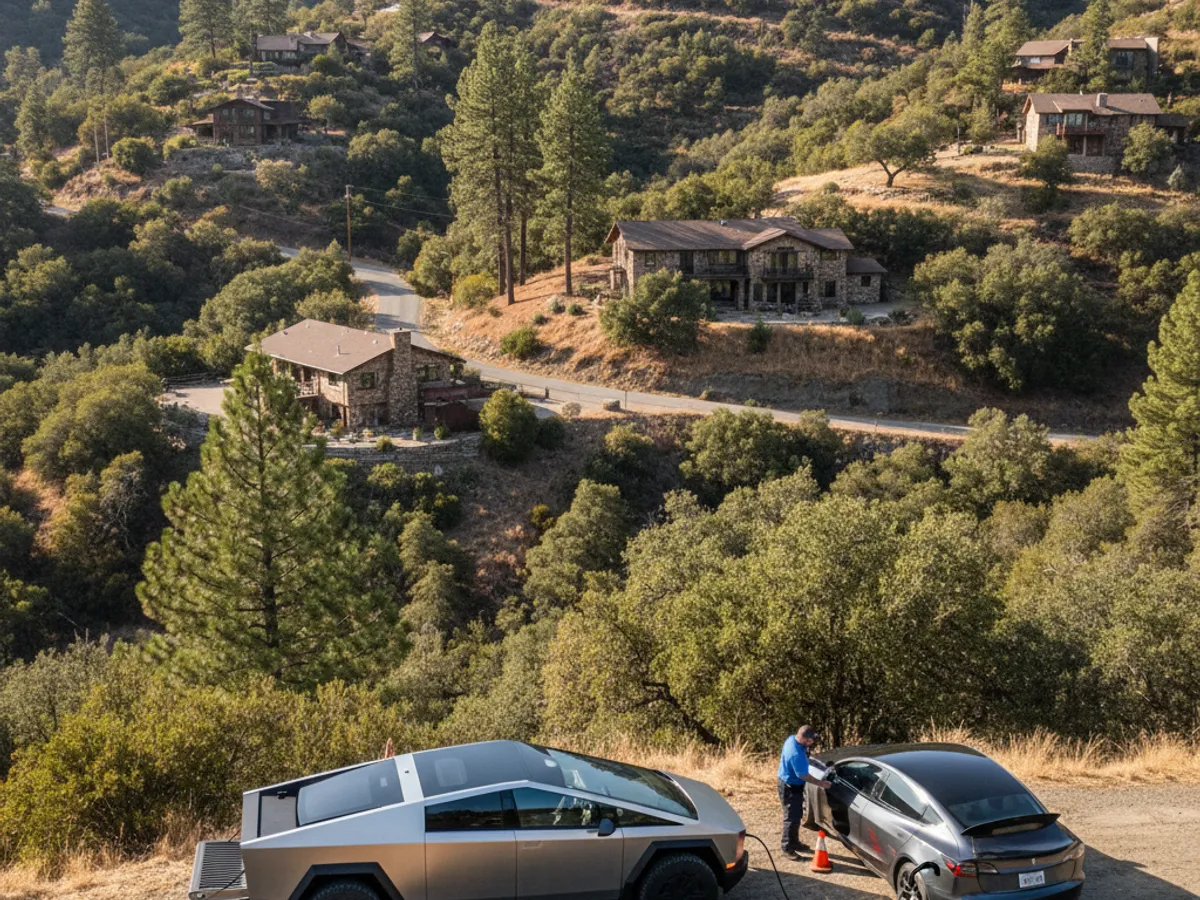
Why do EVs run out of charge in Crest?
Backcountry routes include mountain grades, two-lane highways, trailhead lots, campgrounds, and rural properties. Send an exact pin while signal is available, plus the road surface, gate or park procedure, vehicle, charge port, and battery state. The operator confirms travel time, safe access, compatible equipment, and the realistic next step.
For La Cresta Boulevard or Suncrest Boulevard, send direction of travel, a safe driveway or lot if the car can already reach one, and whether the vehicle is fully outside traffic. For a hilltop driveway, include grade, surface, gate, and clearance. Charge Pro SD does not stage crews on those boulevards. Charge Pro SD does not set the price. The independent operator quotes you before work starts and bills you directly.
Neighborhoods and areas to identify in your request
Use the most specific neighborhood, road, lot, garage, or property entrance available. The independent operator confirms service availability for the exact location.
- Crest core
- La Cresta Boulevard area
- Suncrest Boulevard area
- Post-Cedar-Fire rebuild zones
- Hilltop residential lots
What EV roadside services are available in Crest?
These links describe the request types listed for Crest. Independent operator capabilities vary, so confirm the equipment, scope, price, and timing for your vehicle.
Common questions about mobile EV charging in Crest
How fast can you get to Crest?
Timing depends on operator availability, the climb, safety, and the exact hilltop location. Share the pin, La Cresta Boulevard or Suncrest Boulevard details, and vehicle information. The independent operator provides a timing estimate and price directly. If the car still moves, a driveway or legal lot is preferable to a shoulder.
My EV is dead in my driveway in Crest. Do you do home calls?
Submit the address, driveway access, vehicle, charge port, battery state, and alerts. An independent operator must confirm whether they can reach the car and whether mobile charging or available low-voltage assistance fits. Jumping, replacement, a fixed charging result, and a one-visit parts guarantee cannot be promised. Permanent home charging setup is outside this referral and should go to a qualified electrical professional.
Other Backcountry communities we serve
Where we work in Crest
Use the map to identify the vehicle's exact location. The independent operator confirms availability and access for that specific request.
Stranded with a dead EV in Crest?
Call with the vehicle, charge port, battery state, exact location, and access details. An independent operator confirms feasibility, price, and timing.