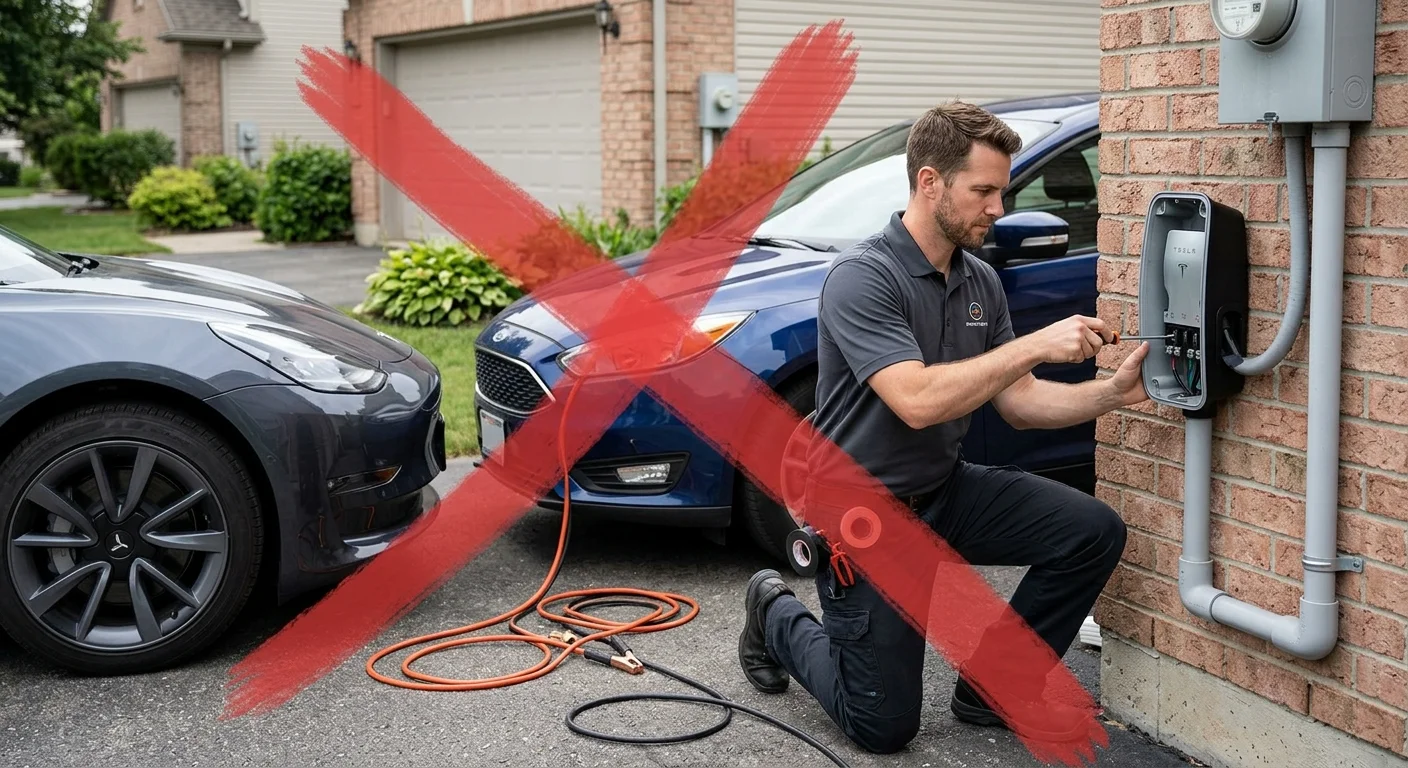
It’s a common scenario: a friend’s gas car won’t start, and you’re there in your Tesla, ready to help. While using your EV to jump-start another vehicle might seem like a kind gesture, it comes with significant risks. Connecting jumper cables from your Tesla to a dead gas car could lead to expensive repairs and unforeseen problems for your advanced electric vehicle.
Why it’s technically possible (but a bad idea)
Many people don’t realize Teslas, like all electric vehicles, still rely on a traditional 12V auxiliary battery. This small but crucial battery powers all low-voltage systems: lights, infotainment, door locks, windows, and the contactors for the main high-voltage battery. When a gas car needs a jump, it’s typically its 12V battery that’s flat, making it seem logical your Tesla could provide the necessary boost.
However, their design and intended purpose differ significantly. A gas car’s alternator is built to robustly recharge its 12V battery and handle the high current draw during a jump start. A Tesla’s 12V system is different. It’s usually recharged by the main high-voltage battery via a specialized DC-DC converter. While a Tesla can receive a jump start when its own 12V battery dies (as detailed in our related guide, Can a Tesla jump start another car?), it is not engineered to deliver the intense current needed to crank a large internal combustion engine. Attempting this puts immense, undue stress on components not built for such heavy loads, potentially triggering electrical issues within your sophisticated EV.
The risk of damage to your Tesla’s sensitive 12V system
Your Tesla’s low-voltage system is highly integrated and incredibly sensitive. Unlike the simpler electrical systems of many gas cars, a Tesla’s 12V battery and its associated components, like the DC-DC converter, are precisely calibrated. They’re designed for optimal efficiency within the Tesla ecosystem, not as a power source for external, high-load demands. When you connect jumper cables to a gas car with a completely dead battery, you create a sudden, heavy current draw. This surge can overwhelm your Tesla’s 12V system.
Potential damage includes frying fuses, damaging the DC-DC converter, or even affecting other delicate electronic control units (ECUs). These components are expensive to replace and require specialized diagnostic tools and expertise to repair. A seemingly minor misstep with jumper cables could lead to your Tesla being inoperable, requiring a tow, and facing a repair bill far exceeding the inconvenience of finding an alternative jump-start method. The financial and time costs for specialized EV parts in San Diego can be substantial. It’s simply not worth the gamble with such advanced and interconnected systems.
Can it void your warranty?
This is a critical concern for any Tesla owner. Automaker warranties are comprehensive but always exclude damage from improper use or negligence. While jump starting another car isn’t a “modification,” it could easily fall under “improper use” if damage occurs. Tesla’s official stance, often in their owner’s manuals, generally advises against using their vehicles to jump start other cars.
If you attempt to jump start a gas car with your Tesla and damage occurs to the delicate 12V system, the crucial DC-DC converter, or related electronic control units (ECUs), Tesla could deny a warranty claim for those specific repairs. Proving the damage wasn’t a direct result of the jump start attempt can be incredibly difficult, if not impossible. Repair costs, which could run into thousands for specialized EV components, would then fall entirely on you. It’s a significant financial risk many Tesla owners in San Diego aren’t willing to take, especially when safer options exist. Protecting your investment means adhering to manufacturer guidelines. Don’t let generosity lead to a warranty nightmare.
What Tesla officially says about jump starting other cars
Tesla’s owner’s manuals are quite clear on this topic, and owners must consult them. While wording varies by model and year, the message is consistent: Teslas are not designed or intended to jump start other vehicles. The manual typically provides detailed instructions on how to receive a jump start for the Tesla’s own 12V battery if it’s dead, outlining correct and safe procedures. However, it conspicuously lacks any instructions or endorsement for using the Tesla as the donor vehicle to provide a jump start to another car.
This official stance isn’t merely a suggestion; it’s a critical technical guideline rooted in the specific engineering and intricate electrical architecture of their vehicles. Tesla’s primary concern is the integrity, safety, and longevity of its sophisticated systems. Disregarding these explicit guidelines can lead directly to warranty complications and unexpected, significant repair expenses. It serves as a straightforward warning: avoid using your Tesla as a mobile jump-start power pack for internal combustion engine vehicles. When in doubt, always refer to your specific model’s owner’s manual for accurate, up-to-date information. Tesla’s design prioritizes its own complex systems, and external jump starting falls outside of its intended, safe operational parameters.
Safer alternatives when a friend needs a jump
So, if your Tesla isn’t the right tool, what are your options when a friend’s gas car has a dead battery in San Diego County?
- Portable Jump Starter: The best and safest option is to carry a portable jump starter. These compact, lithium-ion battery packs are designed to deliver the high current needed to start a gas engine without stressing your car’s electrical system. They’re affordable, easy to use, and a smart accessory for any car owner.
- Call for Roadside Assistance: Most auto insurance policies, AAA, or dedicated roadside assistance plans offer jump-start services. This is a hassle-free way to get help without risking damage to your vehicle. Professionals arrive with the right equipment.
- Another Gas Car: If another gas-powered vehicle is available, that’s usually the most straightforward option for a traditional jump start. Ensure cables are connected correctly: positive to positive, negative to negative on the donor battery, and to a good ground point on the dead car.
- Professional EV Roadside Rescue: For Tesla owners facing their own 12V battery issues, or needing specialized help in San Diego, services like our Tesla 12V Battery Jump offer expert assistance. We understand EV electrical systems and provide safe, effective solutions. Professional services handle these situations, ensuring everyone’s car remains in good working order.
Protecting your Tesla from potential damage is always the priority. Choosing a safer alternative ensures both cars remain functional and avoids costly repairs.
When to call us
If your Tesla’s 12V battery is dead, or if you encounter any other EV roadside issue in San Diego County, it’s best to call a licensed EV charging professional. We specialize in understanding and safely servicing electric vehicle systems, preventing further damage and getting you back on the road quickly. Call us at (858) 925-5546 for a same-day estimate.