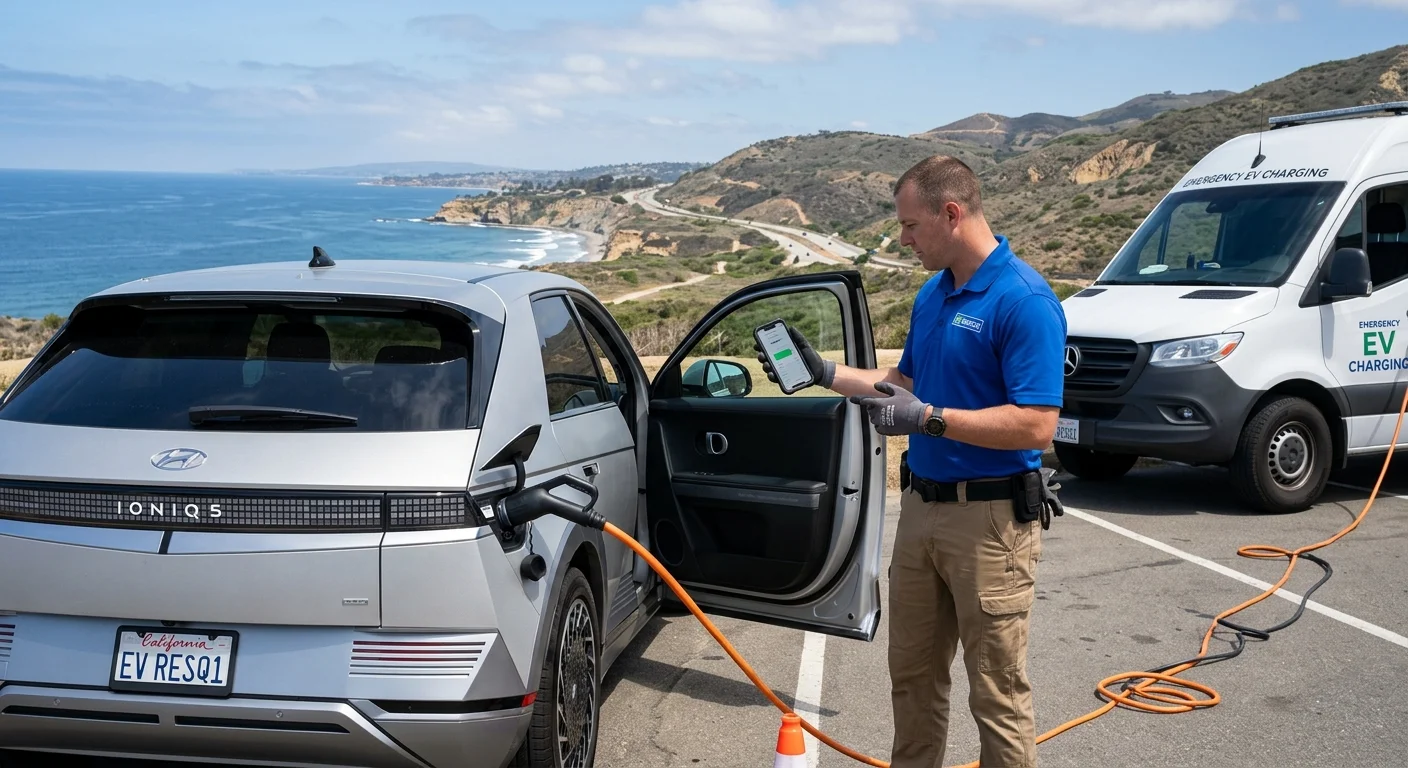
A charging-limit setting left on from weekday parking can cut a San Diego County trip short. The car stops taking energy when it hits that cap, even if a public station is still adding power. Check the current limit in the vehicle before you leave, then match it to the route you plan to drive.

An EV driver checking a charging-limit setting before a trip across San Diego Co

What a charging limit changes

Many electric vehicles let you set a charging limit in the car or in the maker’s app. That setting is a cap. Once the pack reaches it, charging stops, even if the connector is still plugged in.

The limit isn’t a fault. It’s not a dead station. If the session ended at the number you set, the car did what you asked. Our post on charging that stopped at a random percentage covers the other case, when the session dies for a reason you didn’t choose.

Charge Pro SD can’t publish a recommended figure for that cap. Manufacturer instructions differ by model. This site’s verified-claims ledger doesn’t authorize a universal number, a battery-life claim, or a range forecast. The U.S. Department of Energy’s electric vehicle overview explains charging equipment in general. It doesn’t set your car’s ceiling. Use the owner’s manual for the control name and the maker’s current guidance.

A weekday cap meant for coastal hops can leave you short for an inland run. The car won’t keep filling past the cap overnight in North Park. It won’t keep filling past the cap at a Mission Valley stall or a Kearny Mesa DC station. The energy you leave with is whatever sits under that limit when you unplug.

Check the vehicle’s current setting before leaving

Open the charging screens before you back out. Some makers show the same cap in their phone app. Charge Pro SD can’t list menu paths for every model sold in the county. Labels change by brand and software. If you can’t find the control, use the owner’s manual for your exact year.

Look at the number that’s active right now. A guest driver, a dealer visit, or an app update can move it. Don’t guess.

This check isn’t electric vehicle battery maintenance. Charge Pro SD is a referral service. It matches stranded drivers with licensed, independent local operators. It doesn’t service packs, change charge settings, or perform electrical work. A hardware warning belongs at a dealer or an independent EV shop, not on a roadside charging call.

A limit that felt fine for Pacific Beach errands may not match a drive to Ramona, Alpine, or the border. Confirm the car is allowed to take a session at the next place you plan to plug in. If you’re already running low on battery, stop adding trip miles until you know the remaining energy and the active cap. A low pack plus a tight limit is a planning problem, not a reason to keep driving and hope a stall appears.

Plan for I-5, I-8, and I-15 trips

San Diego County isn’t one charging landscape. Coastal north county, inland north county, the central city, East County, and the South Bay ask different things of a pack. Encinitas and El Cajon aren’t the same drive.

I-5 is the coastal spine, from Oceanside and Camp Pendleton down through National City, Chula Vista, and San Ysidro. Exits thin through the base. Marine layer along Encinitas and Del Mar is cooler than inland valleys. Traffic near downtown and the border can stretch a trip without adding a stop. Out-of-charge recovery on the I-5 South Bay stretch is a different problem than a missed stall in Carlsbad.

I-15 runs inland through Mira Mesa, Rancho Bernardo, and Escondido. Inland heat isn’t a La Jolla morning. Grades toward Escondido use more energy than a flat coastal hop. Charge Pro SD has no verified local range figures for those grades, so we won’t invent them. Use the vehicle’s displayed estimate and the stalls your app shows as open. The I-15 corridor notes are for when that plan has already failed.

I-8 leaves Mission Valley and climbs east through La Mesa, El Cajon, and Alpine toward Imperial County. East County heat isn’t a coastal parking-lot problem. Charging thins as you leave the central city. The California Energy Commission tracks zero-emission vehicle and charging policy at the state level. It doesn’t publish a charger count for your exit. The U.S. Department of Transportation’s rural EV charging page is a reminder that density drops as you leave metro San Diego. Confirm live stalls before you commit to the grade.

If the car won’t accept energy past the cap, overnight charging in Point Loma won’t refill the pack for an I-8 climb. A DC stop in Kearny Mesa will also stop at the cap. Check the setting before you pick the freeway.

Know when a reachable charger no longer fits

A charger on the map isn’t a charger you can still reach. The car must have enough remaining energy to get there. The stall must also be allowed to add energy under your current limit.

If the cap is already at the present state of charge, plugging in won’t help. Changing the limit, if the maker allows it, is a vehicle-control decision. Follow the manual. Don’t treat this page as charging instructions.

Station type also matters for EV charging in San Diego. Home Level 2, public Level 2, and DC fast charging are different tools. The Department of Energy describes those levels in general. Residential Level 2 is the common home setup. DC fast charging is public or commercial infrastructure. None of that tells you whether a stall on I-5 is working tonight. Confirm the stall, then confirm your cap will let the car take energy there.

When the next open stall sits past what the display says you can reach, you’re in recovery mode. Don’t keep hunting for a farther pin. Move to a safe stop if you can. A green pin in Chula Vista or Carlsbad doesn’t refill a pack that isn’t allowed to accept more energy.

Choose charging help or vehicle transport

If you’re already stopped, you need a recovery plan. Charge Pro SD connects you with licensed and insured independent local operators. The brand doesn’t own trucks, doesn’t send a fleet, and doesn’t perform the work. The operator you’re matched with does.

Mobile EV charging is the option when the car can still accept energy and a stall isn’t reachable from where you sit. Ask the operator to confirm they can serve your connector and that the vehicle will accept a charge. A limit set at the current state of charge can block a roadside session the same way it blocks a station.

Out-of-charge recovery covers the case where charging on the spot isn’t the right fit. That includes a car that won’t accept energy, a location a mobile unit can’t reach, or a driver who needs the vehicle moved. The matched operator should confirm the transport method for your model. Charge Pro SD doesn’t tow, doesn’t set a price, and doesn’t quote an arrival window.

Don’t treat this call as battery maintenance. If the dashboard points to a pack or 12-volt fault rather than an empty traction battery, say that when you call.

When to call us

Call when the car is stopped with too little energy to reach an open stall, or when a charging-limit setting blocks a session where you sit. Charge Pro SD won’t charge the vehicle, change the setting, or transport the car itself. Call us at (858) 400-4465 and we’ll connect you with a local EV rescue operator.