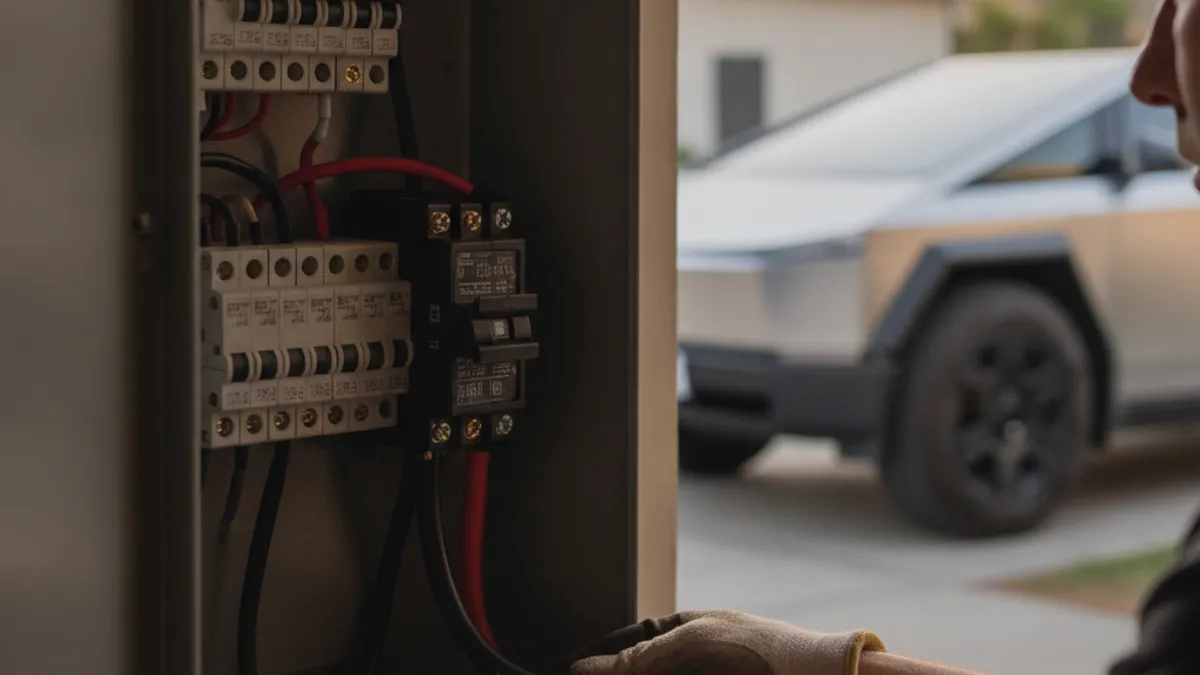
We’re a mobile EV charging and roadside rescue company, not an electrician, so we’ll give you the plain version of this without trying to sell you anything. A panel upgrade tied to a home EV charger installation in San Diego commonly runs a couple thousand dollars or more, on top of the charger install itself, and whether you need one at all comes down to one number: how much spare capacity your existing panel has.
Why a panel upgrade even comes up
A Level 2 EV charger runs on a 240V circuit pulling 40 to 48 amps, similar to an electric dryer or oven. Before adding that circuit, an electrician will normally run a load calculation, adding up everything your home’s panel already powers to confirm there’s room left for the charger. Your electrician and city inspector determine what’s needed for your specific panel and permit. Newer coastal San Diego homes with 200-amp panels usually have that room. Older homes across the county, especially those built from the 1960s through the 1980s with 100-amp or 125-amp panels, often don’t.
What actually gets billed when a panel upgrade is needed
If the load calculation comes back short, there are a few possible paths, and they don’t all cost the same:
- A load management device. This throttles the EV charger automatically when the rest of the house is drawing heavy power, and it’s often the cheapest way to avoid a full panel upgrade entirely.
- A full panel upgrade, typically from 100 or 125 amps to 200 amps. This is the expensive path. It usually involves a new panel, new main breaker, updated grounding, and in many cases coordination with SDG&E on the service connection, plus its own separate permit. Reported costs for a full residential panel upgrade in California commonly run a couple thousand dollars into the mid four figures, sometimes more if the electrical service mast or meter also needs work.
- Circuit sharing. In some homes, an existing high-draw circuit can be split or shared with the new charger circuit, which can avoid a panel upgrade but doesn’t work for every layout.
These are typical market ranges based on the kind of work involved, not a quote. Your actual price depends on your panel’s age, your home’s wiring, and your specific electrician’s rates.
Permits are part of the real cost, not an extra
Every jurisdiction in San Diego County requires an electrical permit for a panel upgrade, whether that’s the City of San Diego, another incorporated city, or the County for unincorporated areas. A reputable electrician includes the permit and inspection scheduling in their quote. If a quote skips the permit to save money, that’s a red flag, not a discount, since an unpermitted panel upgrade can create real problems at resale and with your homeowner’s insurance.
Rebates and incentives change, confirm before you count on them
Incentive programs covering panel upgrades or charger installation costs have existed at various points from utilities, the state, and the federal government. The federal tax credit that used to help cover part of home EV charger installation costs, including some panel work, expired for installations completed after December 31, 2025, so it’s no longer something to count on. Whatever state or utility programs exist today change eligibility and funding levels regularly. Ask your electrician what’s currently active, and verify it directly with the program before you build it into your budget.
Who does this work
A panel upgrade is licensed electrical work, requiring a C-10 licensed electrical contractor in California. Verify any contractor’s license at cslb.ca.gov before signing a contract. We don’t do this work ourselves, and when a panel upgrade or charger install is what a driver needs, we point them to Bright Pro Electric, a licensed San Diego electrician who handles the load calculation, the panel work, and the permit end to end. Our fuller guide on EV charger installation in San Diego covers the rest of that process.
How long a panel upgrade actually takes
Beyond the cost, budget for the calendar too. A straightforward EV charger install with existing panel headroom can happen within a week or two of getting a quote. Add a panel upgrade with SDG&E coordination into the mix, and that timeline commonly stretches to a month or more, longer still during the busy spring and summer install season when electricians across the county are booked out. Getting your load calculation done early, even before you’ve picked a charger, is the single best way to avoid surprise delays later.
While you wait on the electrical work
A panel upgrade with SDG&E coordination can stretch to a month or more, especially in busy seasons. If you’re driving on a slow Level 1 outlet in the meantime, or your range simply runs out before the new charger is live, Charge Pro SD delivers a mobile Level 2 charge directly to your driveway anywhere in San Diego County.
Frequently asked questions
How much does an electrical panel upgrade cost for an EV charger in San Diego?
Reported costs commonly run a couple thousand dollars into the mid four figures, sometimes more depending on your home’s service and whether SDG&E coordination is needed. Get a load calculation and a written quote from a licensed electrician for an exact number.
Do I always need a panel upgrade to install an EV charger?
No. Homes with a newer 200-amp panel and spare capacity often don’t need one. It depends entirely on your existing panel’s load and your electrician’s calculation.
Is the federal tax credit for EV charger installation still available?
No. The federal credit that covered part of home EV charger and related installation costs expired for installs completed after December 31, 2025. Check with your electrician for any current state or utility programs, since those change often.
Who installs a panel upgrade for an EV charger in San Diego?
A licensed C-10 electrical contractor. Verify their license at cslb.ca.gov, and confirm the permit and inspection are included in the quote before you sign anything.
Waiting on your panel upgrade or charger install and running low on range? Call (858) 400-4465 for mobile EV charging anywhere in San Diego County.