A VW ID.Buzz that won’t start is almost always a dead 12V auxiliary battery, not the high-voltage traction pack. That small battery lives under the driver’s seat, not under the hood. Jumping it at the van’s remote terminals restores power in minutes, though a worn battery will need a real replacement soon after.

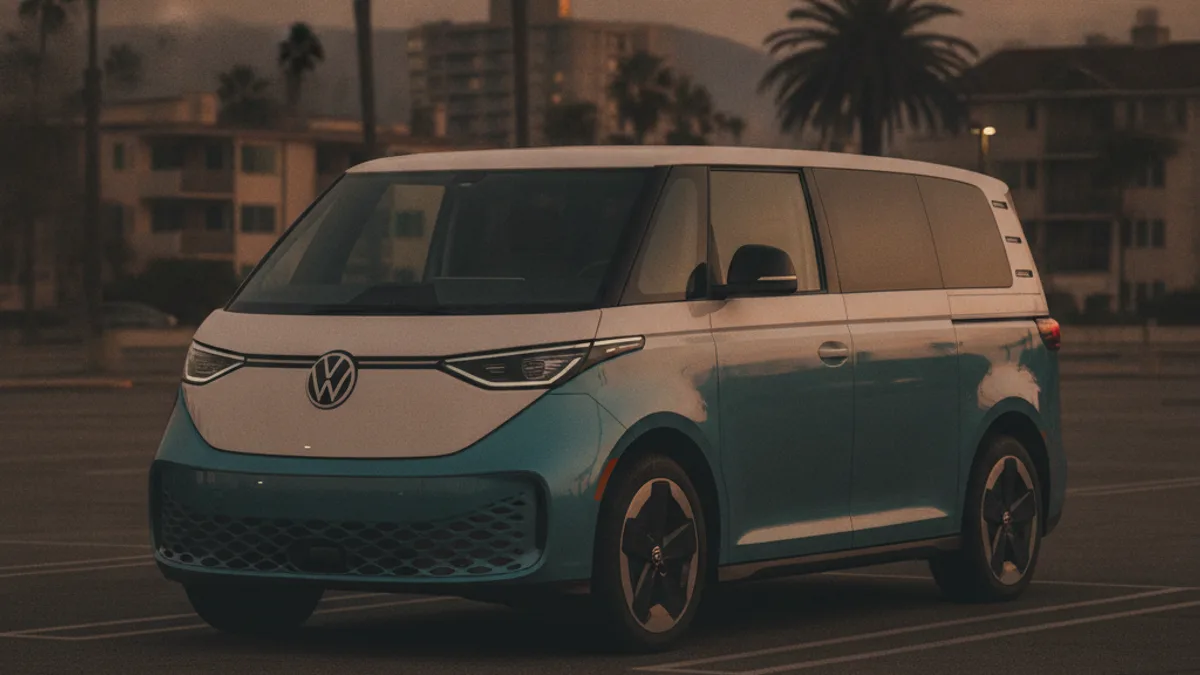
A VW ID.Buzz electric van parked in a San Diego lot with a dark, unlit dashboard, illustrating a dead 12V battery.

The ID.Buzz rides on VW’s MEB platform, the same underpinnings as the VW ID.4, so a lot of this 12V behavior carries straight over between the two.

Why the ID.Buzz goes completely dead (and it’s usually not the main battery)

The ID.Buzz runs on two separate batteries. A 91-kWh high-voltage pack does the driving, and a small 12V lead-based battery runs every low-voltage system, including the computers that wake up the drive system in the first place. That handoff is the whole problem. If the 12V can’t power those computers, the traction battery stays locked out no matter how much charge it’s holding.

Watch for these signs that point straight at the 12V:

  • A “12 volt system error” or “electrical system fault” message on the cluster
  • The van won’t shift into Ready or Drive, even though the traction battery shows plenty of charge
  • The key fob unlocks slowly or not at all, so the physical key is your only way in
  • The screen flickers or the infotainment system keeps rebooting
  • The VW app can’t connect or wake the van remotely
  • You need a jump pack just to get the van to boot at all

If you see a genuine high-voltage fault warning that then shuts the whole dashboard down, that’s a different problem and worth a dealer scan. For the classic “nothing’s happening” scenario, the 12V is where you start. For more on why this happens across EV brands generally, read what happens when an EV’s 12V battery dies.

Where the ID.Buzz 12V battery and jump points actually are

Here’s the part that trips up a lot of ID.Buzz owners, especially ones who’ve owned a gas VW or even an ID.4 before. The physical 12V battery isn’t under the hood. It’s inside the cabin, under the driver’s seat, behind a plastic trim cover. Getting to it means sliding the seat forward and pulling that cover off, which isn’t something you want to do on the shoulder of a freeway.

VW solved that by giving the ID.Buzz remote jump-start terminals up front, under the hood cover, so you never have to dig under the seat just to get a jump. You’ll find a positive (+) post under a red plastic cover, plus a separate metal ground point for the negative clamp. Those are remote terminals wired back to the actual battery. You connect your jumper cables there, not to the buried battery itself.

Because the exact terminal position can shift slightly by model year, confirm the layout in your owner’s manual before you start. It only takes a minute and it means you’re not guessing under a hood cover on the side of the road.

How to jump-start an ID.Buzz safely

  1. Confirm the donor vehicle or jump pack is off before you connect anything.
  2. Open the hood cover and locate the red plastic cap over the positive jump-start post.
  3. Connect one red clamp to the ID.Buzz’s positive post, and the other red clamp to the donor’s positive terminal.
  4. Connect one black clamp to the donor’s negative terminal.
  5. Connect the remaining black clamp to the ID.Buzz’s designated metal ground point, never to the 12V battery’s own negative terminal.
  6. Turn on the donor vehicle, or activate the jump pack, and let it run for a couple of minutes.
  7. Try to power on the ID.Buzz with your foot on the brake. The dashboard should come alive within a few seconds.
  8. Disconnect the cables in reverse order once the van is running.

Never use the ID.Buzz, or any EV, to jump-start another vehicle. VW warns against it directly, and it can damage the van’s own electrical system.

If the van powers on but throws a 12V warning right after, the battery took enough charge to boot but is close to done. Our EV 12V battery replacement guide covers what happens next, including why the new battery has to be coded to the vehicle rather than just swapped in.

Why the 12V keeps dying on the ID.Buzz

This isn’t bad luck. It’s a known pattern across VW’s MEB electric platform, the same one under the ID.4. The 12V battery mostly recharges while the van is being driven, and it can slowly drain while the van just sits parked, running background systems at a low level. A family van that sits for a few days, whether it’s parked at San Diego International’s long-term lot or left at a trailhead in North County over a weekend trip, is a textbook setup for a dead 12V by the time you get back to it.

San Diego heat makes it worse. AGM-style batteries wear out faster in sustained heat, and inland garages in places like El Cajon, Santee, and Escondido run hotter than the coast for most of the year. A 12V that’s a few years old and living in one of those garages is already halfway to failing before you notice a symptom.

When it’s time to replace the battery, don’t treat it as a simple swap. A new 12V has to be coded and registered to the vehicle. Skip that step and you’ll get recurring warnings, odd sleep behavior, and a battery that dies again sooner than it should. Treat replacement as a professional service item, not a driveway job.

When to call for help in San Diego

Before you assume the worst, tell the difference between a dead 12V and a van that’s genuinely out of charge. A dead 12V shows a dark dashboard and an unresponsive fob with the high-voltage battery still reading a healthy charge level, if you can even check it. An empty traction pack looks different: the van may still power on and show real range information, just none of it left to drive on.

A 12V problem needs a jump. An empty traction pack needs an actual charge, which a jump start can’t fix.

That’s where knowing which one you’re dealing with matters, and where having someone show up with the right equipment for either situation saves you a bad afternoon. Charge Pro SD runs 24/7 mobile dispatch across San Diego County, with an average arrival around 35 minutes and mobile service starting at $149. For a van that’s truly out of charge rather than just 12V-locked, our rescue vehicle carries a 240V Level 2 output built right into a Cybertruck, so we can put real range back on the van on the spot instead of arranging a tow. See our EV roadside assistance page or our non-Tesla EV rescue service for full coverage details, and read our guide on how to jump start an EV safely if you want the general version that applies across brands.

ID.Buzz vs ID.4: where’s the 12V battery and jump point

VW ID.BuzzVW ID.4
PlatformMEBMEB
12V battery physical locationUnder the driver’s seat, inside the cabinUnder the hood, passenger side
Jump-start terminal locationRemote posts under the hood cover, positive under a red cap plus a separate ground pointRemote posts under the hood, near the washer fluid reservoir
Direct access to battery terminalsNo, use the remote posts onlyLimited, remote posts are the safer route
Common no-start triggerVan sitting parked for several daysVan sitting parked for several days
San Diego risk factorInland heat accelerates AGM wearInland heat accelerates AGM wear

Frequently asked questions

Why won’t my VW ID.Buzz start even though the battery shows a full charge?

The traction battery and the 12V battery are two separate systems, and the 12V has to be alive for the van to power on at all. If the 12V drops too low, the high-voltage system stays locked out no matter how much charge the main pack is holding. Jump the 12V first before assuming anything else is wrong.

Where is the 12V battery on a VW ID.Buzz?

It’s under the driver’s seat, inside the cabin, not under the hood. VW puts remote jump-start terminals under the hood cover instead, with a positive post under a red plastic cap and a separate ground point for the negative clamp. You jump from those remote terminals rather than the buried battery.

How do you jump-start a VW ID.Buzz?

Connect a red clamp to the positive post under the red cap in the front hood cover, and the other red clamp to the donor’s positive terminal. Connect a black clamp to the donor’s negative terminal, and the other black clamp to the ID.Buzz’s designated ground point, never the battery’s own negative terminal. Let the donor run a couple of minutes, then try to power the van on with your foot on the brake.

Can I use my ID.Buzz to jump another car?

No. VW specifically warns against using the ID.Buzz to jump-start another vehicle, since it can damage the van’s own electrical system. Use a separate jump pack or another vehicle as the donor instead.

Why does my ID.Buzz’s 12V battery keep dying?

This is a known pattern on VW’s MEB platform. The 12V mostly charges while the van is driven and can slowly drain while parked, so a van left sitting for several days is a common no-start scenario. San Diego heat, especially in inland areas, speeds up wear on the AGM-style battery inside.

Does Charge Pro SD come out for a VW ID.Buzz in San Diego?

Yes. We run 24/7 mobile dispatch across San Diego County with an average arrival around 35 minutes and service starting at $149. Our rescue vehicle carries a 240V Level 2 charging output, so if your ID.Buzz is actually out of charge rather than 12V-locked, we can add real range on site.


If your ID.Buzz is sitting dark in a driveway, a parking structure, or a trailhead lot anywhere in San Diego County, call Charge Pro SD at (858) 400-4465. We’re available 24/7 and we’ll walk you through what we’re seeing before we ever dispatch.