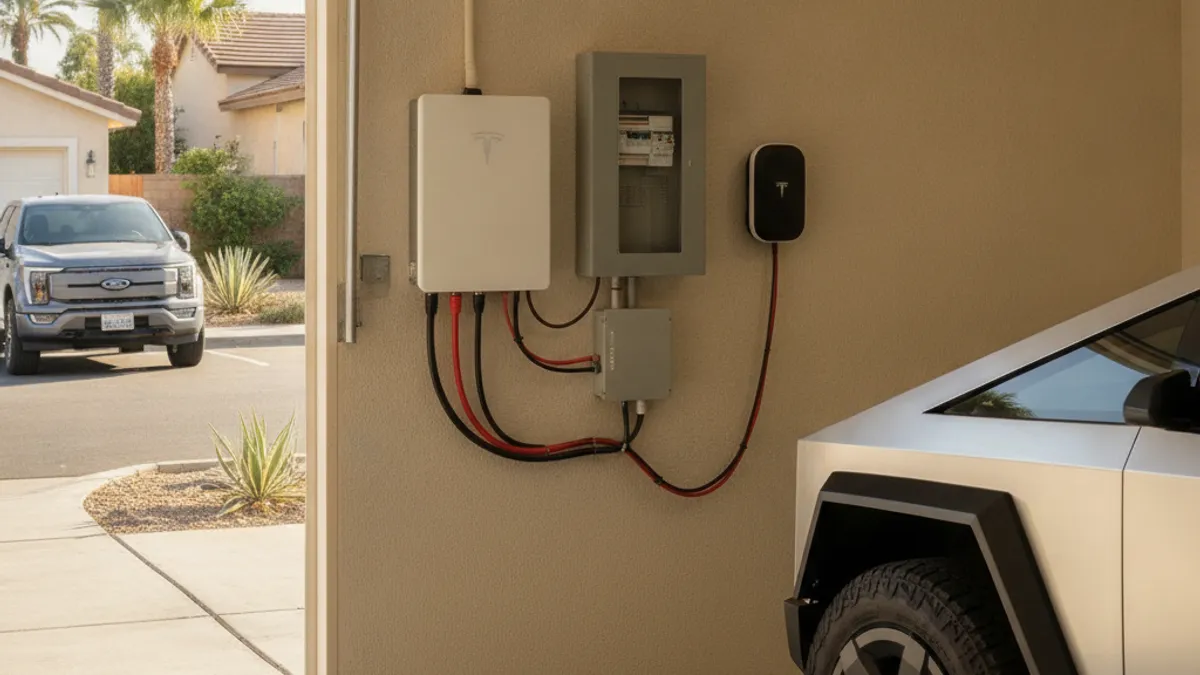
One thing first: Charge Pro SD does not sell, install, or service Tesla Powerwalls. We’re a mobile EV charging and roadside rescue company, and Powerwall is a home energy product, not an EV product, even though it shares a badge with the cars we work on. This guide exists because the two searches get confused constantly. Here’s what a Powerwall actually costs, and who in San Diego actually installs one.
What drives a Powerwall install price
A Tesla Powerwall installed in San Diego typically runs in the thousands of dollars per unit, and the total climbs with each additional unit you add for larger homes or longer backup coverage. A handful of factors move that number more than the hardware itself:
- Number of units. Many homes install two or more Powerwalls for meaningful whole-home backup during an outage, which multiplies both hardware and labor cost.
- Solar pairing. Installing a Powerwall alongside a new solar array is often more efficient than adding one to an existing system, since the electrician handles both the panel and battery interconnection in one project.
- Panel and electrical work. Older San Diego homes, especially inland and in East County, sometimes need panel upgrades or additional wiring to support the Powerwall’s connection, adding to the total.
- Permitting. Every installation requires an electrical permit from your city or the County of San Diego, plus an interconnection agreement with SDG&E, both of which add time and a permit fee to the project.
What a Powerwall actually does for your home
A Powerwall stores electricity, either from the grid during cheap off-peak hours or from a paired solar array, and releases it back into your home’s circuits during an outage or, for some households, during expensive peak-rate hours. How long a single unit can power your home during a blackout depends on your household’s draw and which circuits are backed up. Some homeowners back up only essential circuits, like the refrigerator and a few outlets, to stretch a single unit’s runtime further, while others back up the whole panel and add a second or third unit to match that load.
Powerwall isn’t the only option either. Enphase, Franklin, and a handful of other manufacturers make comparable home battery systems, and a licensed solar or electrical contractor can walk you through how they compare for your specific home and budget. The right choice depends on your existing solar setup, if any, your panel capacity, and how much backup runtime actually matters to you.
Rebates and incentives change constantly, confirm before you buy
Federal, state, and utility incentive programs for home battery storage exist and have offered meaningful savings in the past, but availability, eligibility, and dollar amounts shift regularly and programs can run out of funding entirely. Don’t build your budget around an incentive you haven’t confirmed is currently active. Before signing a contract, ask your installer exactly what applies to your project right now, and verify directly with the program administrator rather than taking a sales quote’s word for it.
Who installs a Powerwall in San Diego
A Powerwall installation is electrical and, in most cases, solar work, requiring a licensed C-10 electrical contractor or a licensed solar installer. Verify any contractor’s license directly at cslb.ca.gov before you sign anything. This is the same category of work as the home battery backup systems we cover in our battery backup explainer for Rancho Peñasquitos and battery backup explainer for Poway, neither of which is something we handle ourselves.
Timeline: what to expect if you move forward
A Powerwall project typically starts with a site visit to assess your panel, your roof if solar is involved, and where the units will physically mount. From there, expect a permit application to your city or the County of San Diego, an interconnection agreement with SDG&E, and a scheduled install day, followed by inspection. Simple single-unit installs on newer homes can move in a few weeks. Multi-unit installs paired with new solar, or homes needing panel work first, can stretch to a couple of months, especially during busy installer seasons in spring and summer.
Why we still get this question
Homeowners searching “Tesla Powerwall cost” and “EV battery” questions end up on similar pages of the internet, and our name shares the word “Tesla” with the product. We’re upfront about the difference: Powerwall stores energy for your house. What we do is bring emergency charging to a stranded electric vehicle. Our full comparison of the two categories lives in our mobile EV charging vs home battery backup guide.
Frequently asked questions
How much does a Tesla Powerwall cost installed in San Diego?
Typically in the thousands of dollars per unit before any incentives, with the total depending on how many units you install, whether it’s paired with solar, and whether your panel needs upgrading. Get quotes from licensed installers for an exact number.
Does Charge Pro SD install Tesla Powerwalls?
No. We’re a mobile EV charging and roadside rescue company. Powerwall installation requires a licensed electrical contractor or solar installer.
Are there rebates for installing a Powerwall in San Diego?
Programs have existed at the federal, state, and utility level, but availability and amounts change often and funding can run out. Confirm current incentives directly with your installer and the program administrator before you count on them, and get the confirmed figure in writing before it factors into your decision.
Is a Powerwall the same thing as EV charging equipment?
No. A Powerwall stores energy for your home during outages. A home EV charger is a separate device that charges your car. They’re often installed by the same type of electrician but serve completely different purposes.
If your EV, not your house, is stranded without power anywhere in San Diego County, call (858) 400-4465 for same-day mobile charging.