When a Polestar 2 won’t start, the 12V battery is almost always the reason, not the main drive battery. The car goes dark: no dashboard, no door handles responding from outside, no way to pop the frunk. The high-voltage pack can be sitting at 90 percent range and none of that matters, because the 12V system has to boot the car’s computers and close the contactors to the big battery before anything else can happen.

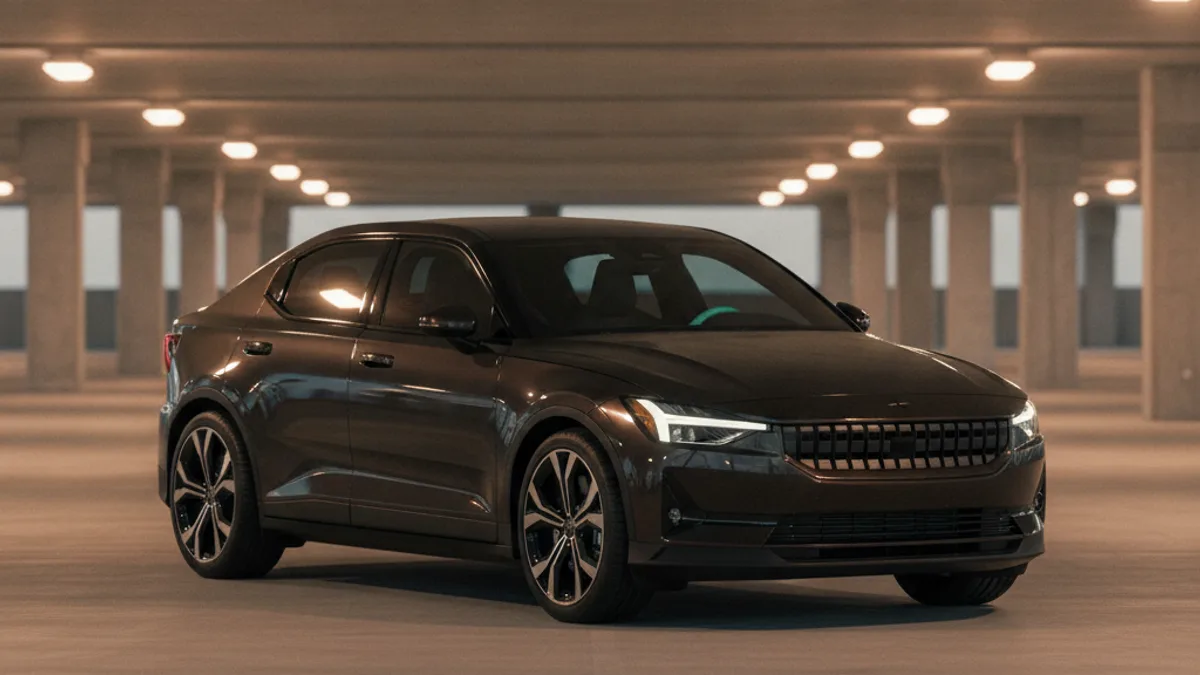
A Polestar 2 parked in a San Diego parking structure with a dark, unresponsive dashboard, illustrating a dead 12V battery.

Polestar 2 owners run into one wrinkle that catches people off guard: the 12V battery lives inside the frunk, but the actual jump points are somewhere else entirely, and if the car is dead enough that you can’t get into the frunk or the cabin at all, there’s a separate emergency access panel built into the front of the car for exactly that situation. Knowing the difference before you’re standing in a structure in Del Mar saves you a lot of guessing.

Why won’t my Polestar 2 start?

A no-start on a Polestar 2 is a dead 12V battery until you prove otherwise. The 12V handles the low-voltage electronics that wake the car and bridge it to the high-voltage drive battery. Polestar doesn’t use an alternator like a gas car. The 12V gets topped up from the main battery through a DC-DC converter while you drive, and if that top-up doesn’t happen often enough, the 12V slowly runs down on its own.

Owners on Polestar’s forums point to a couple of repeat patterns behind that drain. “Always-on connectivity,” the setting that keeps the Polestar app, remote climate, and remote diagnostics reachable, keeps background systems active even while parked. The digital phone key uses Bluetooth to sense when you’re near the car, and in a busy lot with heavy foot traffic, that proximity sensing can wake the car repeatedly instead of letting it settle into deep sleep. Neither is a defect worth chasing down. They’re background draws that a healthy 12V shrugs off and an aging one can’t.

What the black screen and warning messages mean

A common early sign is the center touchscreen going black, rebooting on its own, or showing an energy-saving message before the car fully stops responding. The Android Automotive infotainment system runs on the same low-voltage power as everything else, so it’s often the first thing to act up when the 12V is struggling to hold a stable voltage under load.

Don’t write off a black screen as a software glitch and keep driving on it for weeks. A soft reset, holding the bar at the bottom of the screen for about 20 seconds, clears a one-time glitch. If the screen keeps going dark, reboots on its own, or shows up alongside a low-voltage message, that’s the 12V telling you it’s tired, not the infotainment computer being buggy.

Where the 12V battery lives, and why the frunk isn’t the first step

The 12V battery sits inside the front trunk, underneath the main storage tub. You have to lift the tub liner out to actually see the battery. That’s fine when the car has power and the frunk pops normally. It’s the wrong place to start when the 12V is already dead, because you can’t easily get the frunk open in that state anyway.

Polestar built a dedicated jump-start panel for this reason, and it isn’t at the battery. It’s at the front of the car, low under the hood on the left side, behind a plastic cover held on by five push-pin plugs. That’s where you connect jumper cables, not at the battery terminals themselves.

How to jump start a Polestar 2

Press the locking pin in the center of each of the five plugs with a screwdriver or a pen to release the cover, then lift it away. Underneath, you’ll find two charging points side by side. Use the one closest to the center of the vehicle for positive.

Connect the cables in this order:

  1. Red cable to the assisting battery or jump pack’s positive terminal first.
  2. Red cable to the Polestar’s positive charging point, the one nearer the center.
  3. Black cable to the assisting battery or jump pack’s negative terminal.
  4. Black cable to a bare metal ground bolt on the Polestar’s chassis, not the charging panel itself.

Give it a minute, then try starting the car. Remove the cables in reverse, black first, then red. Polestar is explicit that these points are only meant to jump-start your own car. They aren’t rated to donate power to another vehicle, and trying it risks blowing a fuse. For the full safety rundown that applies across EV brands, see our guide to jump starting an EV safely.

What to do if the frunk won’t open at all

If the 12V is so far gone that the frunk cover panel won’t cooperate or you can’t get the hood release to respond, Polestar built a second option. There’s a small access port hidden under the car, near the front left wheel, that lets you feed power into the 12V circuit from outside without opening anything.

This port has one hard rule: never connect a second 12V battery to it directly. The terminal is fused at a low amperage, documented around 30 amps, and anything that pushes more current than that through it blows the fuse permanently, which is a far bigger repair than a dead battery. A proper jump pack, not a second car battery, is the right tool here, and the positive and negative markings on the port need to be followed exactly. This is a last-resort access point, not the everyday jump procedure, so use the hood panel described above whenever it’s reachable.

Symptom to likely cause

SymptomLikely cause
Dashboard completely dark, no response from key or app12V fully discharged
Center screen goes black or reboots repeatedly12V struggling to hold voltage under load
Doors and frunk won’t respond, but range shows plenty of charge12V too weak to power the low-voltage systems
Car wakes briefly then goes dark again12V can’t sustain load once awake
Repeated no-starts within days of a jump12V has failed and needs replacement

If your Polestar 2 has needed more than one jump in the past few weeks, don’t keep jumping it and hoping. A 12V that won’t hold a charge needs to be tested and likely replaced, not babied along. Our guide to what happens when an EV 12V battery dies covers why one small battery can take down an entire EV, and our Polestar roadside assistance guide covers the broader picture beyond just a no-start.

San Diego scenarios where this happens

Polestar 2s are common in exactly the neighborhoods you’d expect: La Jolla, Del Mar, Encinitas, and other coastal communities with a high density of newer EVs. Those are also the places where cars sit parked for stretches at a time, second homes, weekend cars, long work trips, and that’s when a marginal 12V finally runs out.

The airport is a repeat pattern too. A Polestar 2 left at SAN for a week or two of travel comes home to a dark dashboard because the background draw from always-on connectivity and the digital key’s proximity sensing quietly wore the 12V down while nobody was watching. Downtown parking structures and garages near UTC show up often as well, mostly because the car sits for days between drives and the DC-DC converter never gets a chance to top the 12V back up.

Charge Pro SD covers all of San Diego County for exactly this situation. If you’re in La Jolla or Del Mar, or anywhere else along the coast or inland, we know the structures and the driveways and we’re not guessing at directions when you call.

What Charge Pro SD does

We carry portable jump packs built for exactly this kind of lockout, and we know both Polestar access points, the hood panel for a normal jump and the under-car emergency port for a fully dead car. On a dispatch, we get the 12V jumped, confirm whether it took the charge or needs full replacement, and make sure you’re not calling again next week for the same problem.

Call (858) 400-4465 and we’ll confirm availability for your location. Most of San Diego County sees a 25 to 60 minute response. Charge Pro SD handles non-Tesla EV rescue across the county, Polestar included, and if your issue turns out to be a depleted drive battery instead of a dead 12V, our mobile EV charging service brings a charge to you instead of a tow.

Frequently asked questions

Why won’t my Polestar 2 start even though the range shows plenty of charge?

The range display comes from the high-voltage drive battery, which is separate from the 12V system that actually boots the car. If the 12V is dead or too weak, the car can’t complete its wake-up sequence, so it stays unresponsive no matter how much drive-battery charge is left. A jump on the 12V almost always brings it back.

Where is the 12V battery in a Polestar 2?

It’s inside the front trunk, underneath the main storage tub liner, which has to be lifted out to see the battery itself. For a jump start, though, you don’t go to the battery directly. Polestar built a dedicated jump-point panel at the front of the car, low under the hood on the left side.

How do you jump start a Polestar 2?

Remove the five push-pin plugs holding the panel under the left side of the hood, then connect red cable to the assisting battery’s positive first, then to the Polestar’s positive charging point closest to the center. Connect black to the assisting battery’s negative, then to a bare metal ground bolt on the chassis. Wait a minute, then try starting. Remove cables in reverse order.

What if the frunk won’t open because the 12V is completely dead?

Polestar built an emergency access port under the car near the front left wheel for this exact situation. It lets you feed power into the 12V circuit from outside without opening the frunk or hood. Never connect a second 12V battery directly to it, since the port is fused at a low amperage and too much current blows the fuse for good. Use a proper jump pack instead, and follow the polarity markings exactly.

What does a black screen or reboot on the center display mean?

It often means the 12V system is struggling to hold stable voltage under load, since the Android Automotive infotainment runs on the same low-voltage power as everything else. A one-time soft reset can clear a glitch, but a screen that keeps going dark or reboots repeatedly is usually the 12V telling you it’s failing, not a software bug.

Does Charge Pro SD come to Polestar 2 owners in San Diego?

Yes. We respond to Polestar 2s and every non-Tesla EV across San Diego County, including La Jolla, Del Mar, Encinitas, and the parking structures downtown and around UTC. Typical dispatch is 25 to 60 minutes. Call (858) 400-4465 and we’ll confirm availability for your location.

Can a Polestar 2’s 12V battery drain just from sitting parked?

Yes. Always-on connectivity features and the digital key’s Bluetooth proximity sensing both draw background power even when the car isn’t moving, and in a busy lot where the car keeps waking up as people walk by, that draw adds up faster than usual. Leave a Polestar 2 with a marginal 12V parked for a week or two and that pattern can finish it off.


If your Polestar 2 is dark and won’t respond, call Charge Pro SD at (858) 400-4465. We carry the tools for both the standard jump procedure and the emergency access panel, so you’re not stuck guessing at push-pins and hidden ports on your own.