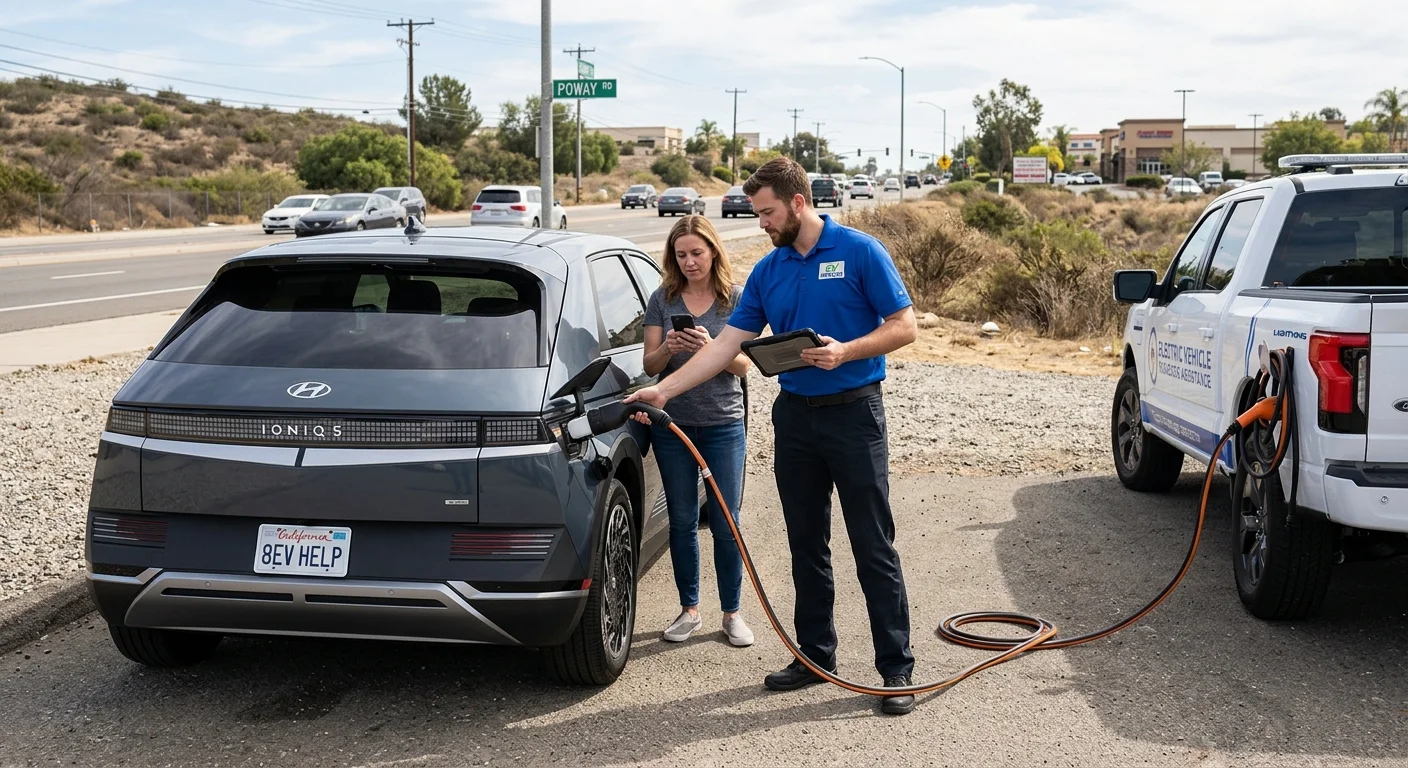
A stalled EV near Poway Road creates one immediate decision. Can an operator charge it where it sits, or does it need transport? Mobile EV charging in Poway may fit, but the matched operator must first review the vehicle, battery state, and access.

An electric vehicle parked safely near Poway Road while its driver shares vehicl

Share your location along Poway Road

Start with your precise location, not simply “Poway Road.” Tell the operator your nearest cross street, travel direction, and which side of the road you’re on. If you’re inside a shopping center, share the business name and the entrance you used.

A map pin helps, but add written details. The pin could identify the property without showing your actual parking spot. Mention whether the EV is beside a curb, inside a lot, or in a private driveway. Include a stall number or nearby storefront when one is visible.

Driveway access needs similar detail. Tell the operator about closed gates, narrow entrances, parked vehicles, or anything blocking a direct approach. If someone must provide access, explain how the operator should contact that person. Don’t share a gate code publicly. Give it directly to the matched operator if needed.

Photos can clarify the situation. Take one showing the EV and another showing the approach. Keep yourself out of moving traffic while taking them. If the vehicle is creating an immediate danger, contact emergency services first.

Charge Pro SD is a referral service. We connect stranded drivers with licensed, independent local operators. We don’t operate charging vehicles or perform roadside work. The matched operator reviews your location and decides whether the site is workable for mobile EV charging.

Tell empty charge from low-voltage failure

Don’t diagnose the problem from one symptom. Instead, report exactly what the vehicle and app show. A blank screen, an unresponsive door, a warning message, and a displayed battery percentage are separate details. The operator needs the full picture before recommending charging or transport.

If the dashboard works, share the displayed charge level. Copy warning messages word for word. Photos are better than paraphrasing unfamiliar alerts. Also say what happened before the stall. The vehicle may have stopped while driving, failed to start after parking, or remained connected without gaining charge.

If the screen is dark, say that plainly. Don’t describe the main battery as empty unless the vehicle displayed that condition. Likewise, don’t assume every unresponsive EV needs a low-voltage jump. The matched operator must review the vehicle model, its current behavior, and any available app information.

The car’s manual and manufacturer app may contain model-specific instructions. Follow those instructions when they’re available. For broader background, the U.S. Department of Energy maintains an electric vehicle overview.

Drivers who still have usable charge should review what to do when an EV is running low. Once the vehicle has stalled, avoid repeated guesses. Clear observations help the operator assess whether out-of-charge recovery matches the situation.

Account for Scripps Poway Parkway access

A location on Scripps Poway Parkway needs more detail than the road name. Share your direction of travel and the nearest exit, intersection, or recognizable entrance. Tell the operator whether the EV is on the roadway, off the traveled lane, or inside a nearby property.

Your live location and the vehicle’s location may differ. You might have walked to a safer place or entered a nearby business. Make that difference clear. Send a pin for the EV itself, then explain where you’ll meet the operator.

Access also changes when the car is behind a gate or inside a parking area. Mention gate access, parking controls, low clearances, and tight turns if they apply. Don’t assume the operator can enter every driveway or lot. The operator must confirm whether the vehicle and any required equipment can be reached safely.

If you moved the car after sending your first pin, provide the new location. A short message such as “same property, north-side lot” can prevent confusion. Keep your phone available for questions, but don’t wait beside moving traffic.

The Poway EV roadside assistance guide covers broader roadside situations. This page focuses on the narrower decision after an energy-related stall. Charge Pro SD passes your information to an independent operator, who reviews access before accepting the work. Operator availability, vehicle compatibility, and site access must be confirmed for that specific request.

Prepare the details an operator needs

Gather the key facts before making the call. You don’t need to solve the problem yourself. You need to describe it accurately enough for an operator to assess.

Have these details ready:

  • Your EV’s make, model, and model year
  • The displayed battery percentage, if visible
  • Warning messages shown on the dashboard or app
  • Whether the displays, locks, and charge port respond
  • What happened immediately before the vehicle stopped
  • Your exact location and travel direction
  • Whether the EV is in a lane, lot, garage, or driveway
  • Gate, clearance, parking, or property-access limits
  • Photos of the vehicle, display, and approach
  • Your preferred transport destination, if charging doesn’t fit

Mention any charging cable or connector already attached to the vehicle. Don’t disconnect equipment against the vehicle manufacturer’s instructions. Tell the operator whether the charge port opens and whether the vehicle can be placed in the mode required for movement. If you don’t know, say so.

Avoid estimating the charge you need. Explain where you intended to go and let the operator assess the request. Don’t promise a property owner that roadside equipment will fit. The operator decides what equipment, access, and vehicle compatibility allow.

Charge Pro SD doesn’t set prices or determine the final service. A verified Poway-specific price couldn’t be confirmed from the approved sources for this page. Ask the matched operator for the total and service scope before authorizing work. The operator should also explain any separate transport charge if transport becomes the recommended option.

Choose mobile charging or transport

Mobile charging and transport solve different situations. The right choice depends on the vehicle, its battery state, its behavior, and safe access. The matched operator reviews those details before deciding whether charging at the location fits.

Mobile charging may be considered when the operator confirms the vehicle, connector, and site are compatible with the service offered. Don’t assume a certain amount of delivered energy. Don’t assume the service will make the vehicle ready for a particular trip. Ask what the operator can provide and what outcome they expect before approving the work.

Transport may be the better fit when the operator determines mobile charging isn’t appropriate. That can include a problem that isn’t confirmed as an empty driving battery, an inaccessible vehicle, or a site where the offered service can’t be performed. The operator should discuss the destination and vehicle-handling requirements with you.

Your nearest public charger isn’t automatically the right destination. Confirm that the proposed location works for your vehicle and situation. If the EV may need repair instead of charging, discuss a suitable service destination with the operator.

Don’t make the choice based only on an advertised headline price. Ask what the quoted service includes, who performs it, and whether transport could be added. Charge Pro SD doesn’t provide warranties or set an operator’s terms. You contract with and pay the independent professional directly.

The useful question is simple: what can safely move this specific EV toward a workable charging or service location? The operator answers that after reviewing the facts you provide.

When to call us

Call when your EV has stalled in Poway and you need an operator to assess mobile charging or transport. Have the vehicle details, battery display, warning messages, and exact access information ready. Call us at (858) 400-4465 and we’ll connect you with a local EV rescue operator.