Tesla’s exact 24/7 roadside availability in San Diego couldn’t be confirmed from our approved sources. Don’t assume help is continuously available based on an old search result. Check the Tesla app for the current options tied to your vehicle and location.

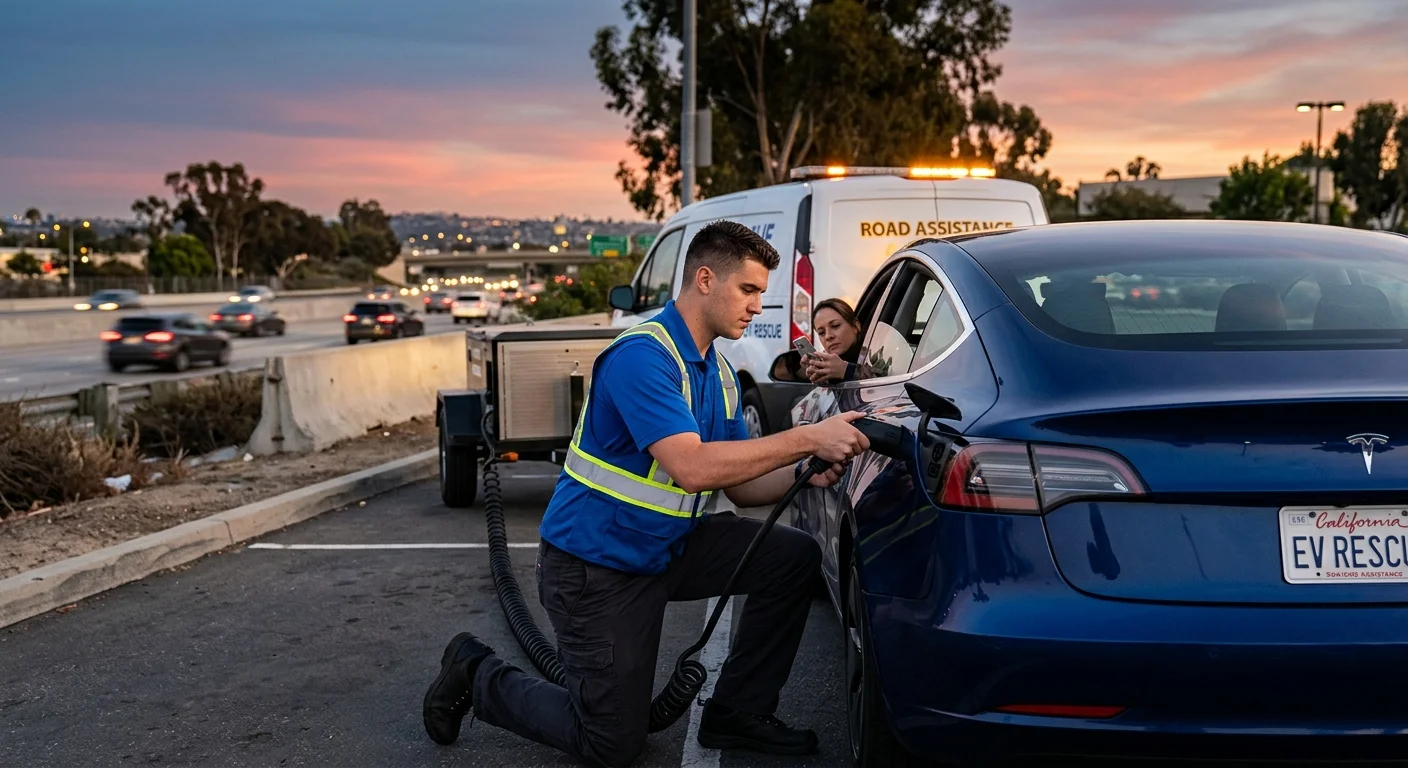
A Tesla parked safely near a San Diego freeway exit at dusk, with the driver che

The short answer and where to verify it

The short answer is that continuous Tesla roadside availability couldn’t be confirmed here. Tesla’s official app should be your first place to check. It can show whether a roadside option is available when you need it.

Open the Tesla app connected to your vehicle. Look for a Roadside or support option. Read every condition shown before submitting a request. If the option doesn’t appear, use Tesla’s current support materials rather than an older third-party page.

Hours and coverage are separate questions. A request channel might be visible while a specific problem remains outside its terms. Don’t treat the phrase “roadside assistance” as automatic confirmation that your exact situation qualifies.

The same caution applies to search results displaying a phone number. Numbers and support routes can change. Our guide to the Tesla roadside assistance phone number explains why the app should remain part of your verification process.

Drivers around San Diego should also describe their location precisely. “On I-805” isn’t enough when requesting roadside help. Note the travel direction, nearest exit, visible signs, and whether the Tesla is in a lane, shoulder, garage, or parking lot.

For more questions to check before requesting service, read our Tesla roadside coverage guide. It helps separate confirmed information from assumptions about eligibility.

What Tesla’s roadside program may handle

We couldn’t confirm a current, complete list of problems covered by Tesla roadside assistance. Check the terms displayed in the app or Tesla’s current official materials. Those sources should decide whether your situation qualifies.

Start by identifying what happened without diagnosing the car yourself. Useful descriptions include an empty high-voltage battery, a flat tire, a warning on the screen, a locked charge port, or a vehicle that won’t power on. Report the exact message shown in the car or app.

A Tesla that won’t move can have different causes. Low charge, tire damage, or a low-voltage problem may require different equipment. Avoid telling a provider that the car “just needs a jump” unless that has been confirmed. A wrong description can send the wrong type of help.

Coverage also shouldn’t be confused with cost. We couldn’t confirm that Tesla will cover every request, location, or service without charge. Review the terms shown for your vehicle before accepting assistance. Ask who sets the charge and who will collect payment when the request isn’t covered.

If the main battery is depleted, a Tesla roadside rescue option from an independent local operator may be another route. Charge Pro SD only makes the connection. The operator evaluates the vehicle, explains available service, and handles the work directly.

How to request help through the Tesla app

Open the Tesla app tied to the stranded vehicle. Look for the current Roadside or support area. If a roadside request option appears, follow its on-screen instructions and review the displayed terms before submitting anything.

Have the vehicle’s location ready. Include the roadway, direction of travel, nearest exit, and a nearby landmark. In Downtown San Diego, a garage name and level may be more useful than a street address alone. In North County or East County, note the closest signed junction.

Describe the Tesla’s condition in plain words. State whether the screens are active, whether the car shifts into gear, and what warning message appears. Mention visible tire damage, smoke, unusual heat, collision damage, or a blocked traffic lane. Don’t open electrical components or attempt repairs beside moving traffic.

Take screenshots of the app request and any confirmation it provides. Save the provider’s name, terms, and instructions shown on your screen. If the request stalls or disappears, return to Tesla’s current support channel and verify the next step.

Don’t keep retrying an old phone number found in an unsourced directory. Our comparison of the Tesla roadside phone and app routes explains what information to prepare for either contact method. The article doesn’t promise which route will answer first.

What to do if the car is in an unsafe position

Treat immediate traffic danger as an emergency, not a coverage question. If the Tesla is blocking an active lane or someone faces immediate danger, call 911. Follow the directions given by emergency responders.

If the vehicle can be moved without adding risk, place it away from moving traffic. Don’t attempt to push, charge, tow, or inspect a Tesla from a live freeway lane. Conditions change quickly on I-5, I-8, I-15, I-805, and San Diego’s busy interchanges.

Use the car’s hazard lights if they work. Share your exact position with the responding service. The nearest exit, travel direction, shoulder side, and mile marker can prevent confusion. A map pin helps, but it shouldn’t replace a written location description.

Your safest position depends on the scene. A narrow shoulder, collision, fire concern, or fast traffic can change what you should do. Don’t follow generic advice that conflicts with instructions from emergency personnel at the scene.

Once the immediate hazard is addressed, determine what kind of assistance the Tesla needs. A tow, mobile charging option, tire service, or low-voltage assessment aren’t interchangeable. Our out-of-charge freeway guide provides a focused checklist for documenting the situation without attempting roadside electrical work yourself.

When an independent local operator is another option

An independent operator may be useful when Tesla’s current app doesn’t offer a suitable path, the displayed terms don’t cover the problem, or you prefer another provider. Confirm the operator’s service, price, and payment terms before agreeing to work.

Charge Pro SD is a referral service serving San Diego County. We connect drivers with licensed, independent local EV charging professionals. We don’t perform roadside work, own rescue vehicles, set operator prices, or provide warranties.

Explain the vehicle’s condition before the operator accepts the request. Share the Tesla model, visible warnings, battery status if available, and exact location. Say whether the car is accessible from a parking area or stopped near traffic. The operator can then decide whether the request matches its equipment and services.

For broader help beyond Tesla’s program, review our emergency EV roadside assistance service. You can also compare provider questions in our guide to the best roadside assistance options for Tesla drivers in San Diego. Neither page should replace the terms provided by the operator you hire.

Before accepting service, ask who will perform the work and what the quoted amount covers. Confirm whether towing, charging, tire help, or another service is being proposed. Keep the agreement and payment record provided by that independent operator.

When to call us

Call when your Tesla is stranded and you need help finding a mobile EV rescue operator in San Diego County. We don’t promise availability or an arrival time, and the independent operator will confirm the service and terms directly.

Call us at (858) 400-4465 and we’ll connect you with a local EV rescue operator.