The real answer changes every time SDG&E updates its rate schedule, so instead of quoting a number that’s stale by the time you read it, here’s the actual math you can run yourself. A full home charge of a Tesla typically costs somewhere between $15 and $30, depending on your rate plan, the size of your battery, and whether you charge during peak or off-peak hours.

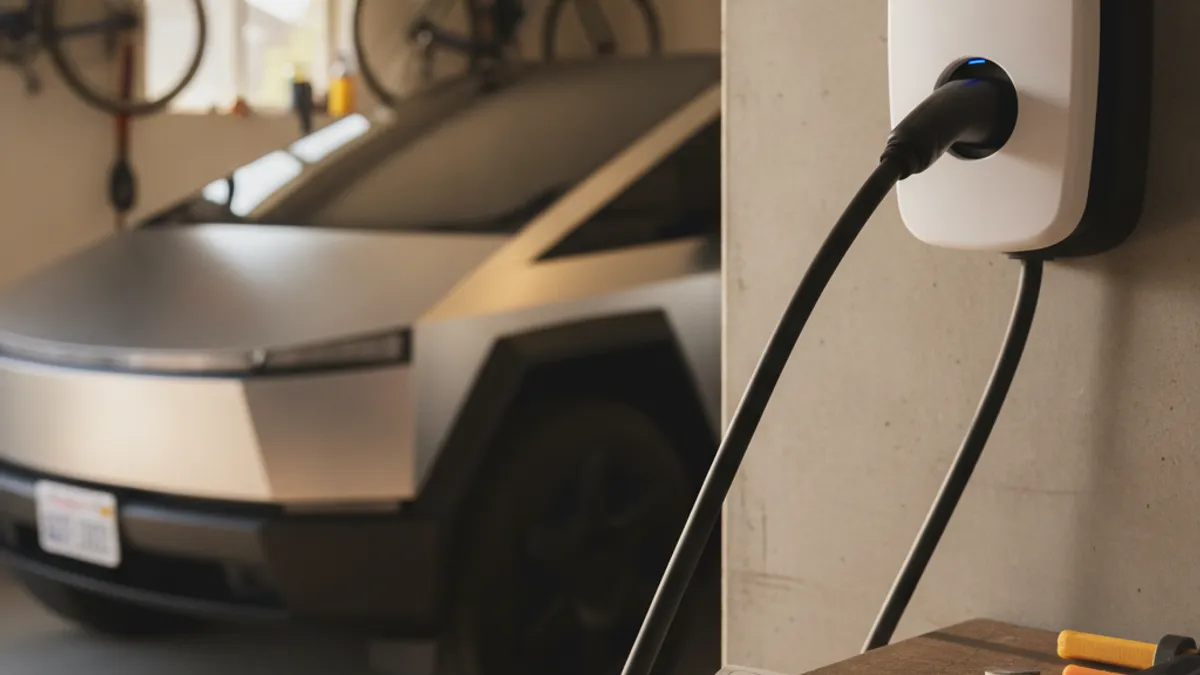
Close-up of an SDG&E electricity bill next to a Tesla charging cable plugged into a home wall connector in a San Diego garage.

The formula behind the number

Charging cost comes down to one calculation: your battery’s size in kilowatt-hours (kWh), multiplied by your electricity rate in cents per kWh, adjusted for charging losses. A Model 3 Long Range holds around 75 kWh, a Model Y Long Range is similar, and a Model S or X runs closer to 100 kWh. Charging isn’t perfectly efficient either, expect to lose roughly 10 to 15% to heat and conversion loss between the wall and the battery.

To estimate your own cost: take your battery size, add about 12% for charging losses, then multiply by your current per-kWh rate from your latest SDG&E bill. That’s your real number, not an average pulled from a different state’s electricity prices.

A worked example, purely illustrative

Say you’re charging a Model 3 Long Range from 20% to 100%, roughly 60 kWh of usable capacity, plus about 12% in losses, so around 67 kWh actually drawn from the wall. If your off-peak rate happens to be around $0.30 per kWh, that charge costs roughly $20. Charge the same amount during a peak afternoon hour on a more expensive tier, and the same energy could cost noticeably more. Swap in your actual rate from your bill and the math scales up or down from there. Treat this as a method, not a quote.

Why SDG&E’s rate plan matters more than the battery size

San Diego has some of the highest residential electricity rates in the country, and SDG&E’s time-of-use structure means the exact same charge can cost very different amounts depending on when you plug in. Most EV owners are on a time-of-use plan built around EV charging, commonly called TOU-EV, which sets a cheap overnight window, typically midnight to 6 a.m., against much more expensive peak and mid-peak hours during the day and early evening.

Overnight off-peak rates often run meaningfully lower than daytime peak rates, sometimes by half or more, but the exact cents-per-kWh figures shift with SDG&E’s rate cases and the season. Rather than lock in a number here that will be outdated in a few months, check your current rate schedule directly at sdge.com or look at the rate breakdown printed on your latest bill. That’s the only number that reflects what you’re actually paying today.

What changes the cost beyond the rate plan

A few other things move your real-world cost up or down:

  • Charging speed. Home Level 2 charging is the cheapest way to charge, full stop. DC fast charging at a Supercharger or third-party network costs more per kWh than home charging, sometimes significantly more, since you’re paying for the convenience of speed.
  • Battery size and how empty you start. A Model S or X with a bigger pack costs more to fill than a Model 3, simply because there’s more capacity to charge.
  • Solar offset. If your home has solar and you charge during daylight hours when your panels are producing, your effective cost can drop close to zero, though most EV owners still charge overnight when solar isn’t generating.
  • Seasonal rate changes. SDG&E adjusts rates periodically, and summer often carries higher peak pricing than winter. Whatever number you calculate in January may not hold in August.

Home charging versus public fast charging cost

As a rule of thumb, home Level 2 charging on an off-peak rate is the cheapest way to charge a Tesla in San Diego, and public DC fast charging is the most expensive per kWh, even before accounting for network membership fees or idle fees. If you’re weighing whether to install home charging at all, our guide on Level 1 charging explains why most owners upgrade past the standard wall outlet, and our post on electrical panel upgrade costs covers what that install can run if your home’s panel needs work first.

How this compares to fueling a gas car

Even at San Diego’s above-average electricity rates, charging a Tesla at home on an off-peak plan generally costs less per mile than filling a comparable gas car at San Diego County’s gas prices, which also rank among the highest in the country. The gap narrows if you’re charging mostly on peak-rate public fast chargers instead of overnight at home, since that’s the most expensive way to put energy into the car. The savings are real, but they’re biggest for owners who actually use the cheap overnight window rather than defaulting to public charging out of convenience.

Frequently asked questions

How much does it cost to fully charge a Tesla at home in San Diego?

Typically $15 to $30 for a full charge, depending on your SDG&E rate plan and your battery size. Check your current rate at sdge.com since it changes over time.

Is it cheaper to charge a Tesla overnight in San Diego?

Yes, usually significantly cheaper. Most SDG&E time-of-use plans for EV owners set the lowest rates between midnight and 6 a.m., with peak daytime and evening hours costing much more.

Does charging at a Supercharger cost more than charging at home?

Yes. DC fast charging is priced for speed and convenience, and it typically costs more per kWh than a home Level 2 charge on an off-peak rate plan.

Are there rebates that lower the cost of home EV charging in San Diego?

Utility and state incentive programs for EV charging equipment exist from time to time, but they change and run out of funding regularly. Confirm what’s currently available directly with SDG&E or your installer before you count on it.

Waiting on a charge somewhere you can’t plug in? Call (858) 400-4465 for mobile EV charging anywhere in San Diego County.