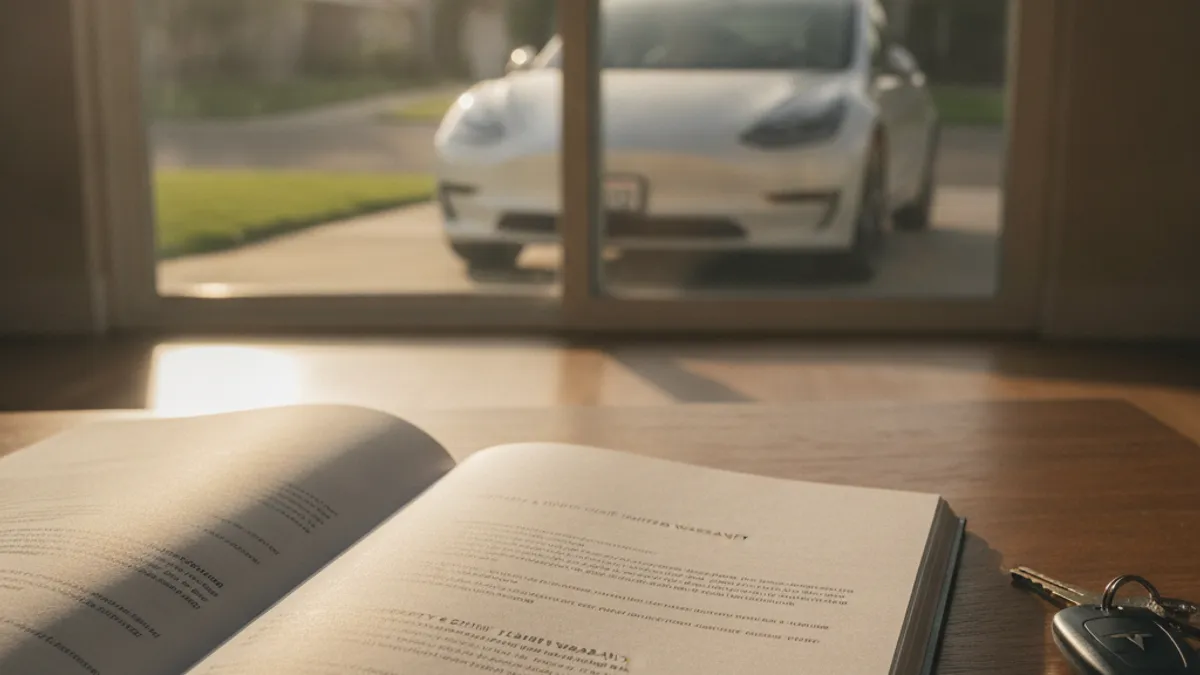
This is a different warranty than the roadside assistance coverage that came bundled with your Tesla. Tesla’s Battery and Drive Unit Limited Warranty covers the main battery pack for 8 years, with a mileage cap that varies by model, and guarantees the pack won’t drop below a minimum capacity threshold during that window. Here’s what that actually means in practice, and where owners get tripped up.
The coverage terms, by model
Tesla’s published battery and drive unit warranty terms have historically broken down like this:
- Model 3 and Model Y, standard range: 8 years or 100,000 miles, whichever comes first.
- Model 3 and Model Y, long range or performance: 8 years or 120,000 miles.
- Model S and Model X: 8 years or 150,000 miles.
Alongside the years and mileage, Tesla guarantees the battery retains a minimum percentage of its original capacity during the warranty period, historically around 70%. If the pack degrades below that threshold from a defect within the covered period, Tesla repairs or replaces it. Because warranty terms can shift by model year and build date, always confirm the exact terms for your specific vehicle on Tesla’s support site or in your owner’s account, rather than assuming an older or newer model matches these numbers exactly.
What the warranty does and doesn’t cover
The battery and drive unit warranty covers manufacturing defects and abnormal capacity loss beyond normal wear. It does not cover damage from accidents, water intrusion, unauthorized modifications, or capacity loss that falls within Tesla’s expected degradation curve. Normal, gradual range loss over years of ownership, the kind we cover in our battery lifespan guide, is not itself a warranty claim. The warranty exists for packs that fail well outside that expected curve.
It’s also worth separating this from the 12V auxiliary battery, which is a wear item with its own much shorter service life and isn’t covered by the same 8-year terms. If your Tesla suddenly won’t power on, that’s more likely a 12V issue than a main pack warranty matter, and our 12V battery replacement cost guide covers that separately.
The drive unit, the motor and gearbox that actually turns the wheels, is bundled into this same warranty alongside the battery. A failure in either component during the coverage window is handled the same way, through a service visit and Tesla’s own diagnosis, rather than treating them as two separate claims processes.
Certified pre-owned and extended coverage
A Tesla purchased as Certified Pre-Owned typically carries the remainder of the original battery and drive unit warranty from the vehicle’s in-service date, not a fresh 8-year clock. If you bought used from a private party or third-party dealer, the original warranty transfers with the vehicle, again based on the original in-service date. Always review the specific coverage document tied to your VIN rather than assuming a standard timeline applies.
How to check your own vehicle’s coverage
Don’t rely on general model-year figures for a decision that matters. Your specific coverage is tied to your car’s VIN and in-service date, both of which Tesla ties to your online account. The fastest way to check is through the Tesla app or your online account, where your vehicle’s warranty details, including the in-service date that started the clock, are listed against your specific VIN. If anything looks off, or you bought the car used and aren’t sure what transferred, contacting Tesla directly with your VIN is faster than guessing from general model-year information.
What can void battery warranty coverage
A few things put battery coverage at risk, and they’re worth knowing before they become a problem:
- Unauthorized modifications to the battery, drive unit, or charging system, including aftermarket performance modifications.
- Using damaged or non-compliant charging equipment that causes electrical damage to the vehicle.
- Accident or water damage that isn’t itself a manufacturing defect, even if it later affects the battery.
- Neglecting a known safety recall or required software update tied to battery safety, in some cases.
None of this applies to normal use, including regular Supercharging, home charging, or the gradual capacity loss covered in our battery lifespan guide. It’s aimed at genuine misuse or damage, not ordinary ownership.
What happens if you actually need a warranty claim
If your battery health app shows a capacity drop that seems out of line with normal aging, the process starts with scheduling a service visit through the Tesla app. Tesla’s own diagnostics determine whether the degradation falls outside the warranted threshold. This is not something a roadside or mobile charging service can evaluate or process, it has to go through Tesla directly.
Frequently asked questions
How long is Tesla’s battery warranty?
8 years across all models, with the mileage cap varying by model: typically 100,000 miles for standard range Model 3 and Y, 120,000 for long range and performance versions, and 150,000 for Model S and X. Confirm your specific vehicle’s terms with Tesla directly.
What capacity loss does Tesla’s battery warranty guarantee against?
Tesla has historically guaranteed the pack won’t drop below roughly 70% of its original capacity during the warranty period due to a defect. Normal expected degradation within that threshold isn’t a warranty claim.
Does Tesla’s battery warranty cover the 12V battery too?
No. The 12V auxiliary battery is a separate wear item with a much shorter typical service life and isn’t covered under the same 8-year battery and drive unit terms.
Does buying a used Tesla reset the battery warranty clock?
No. The battery and drive unit warranty is tied to the vehicle’s original in-service date, not the current owner’s purchase date, whether it’s Certified Pre-Owned or a private sale.
If your Tesla’s 12V battery dies or you’re stranded with an empty pack anywhere in San Diego County, call (858) 400-4465 for same-day mobile rescue.